
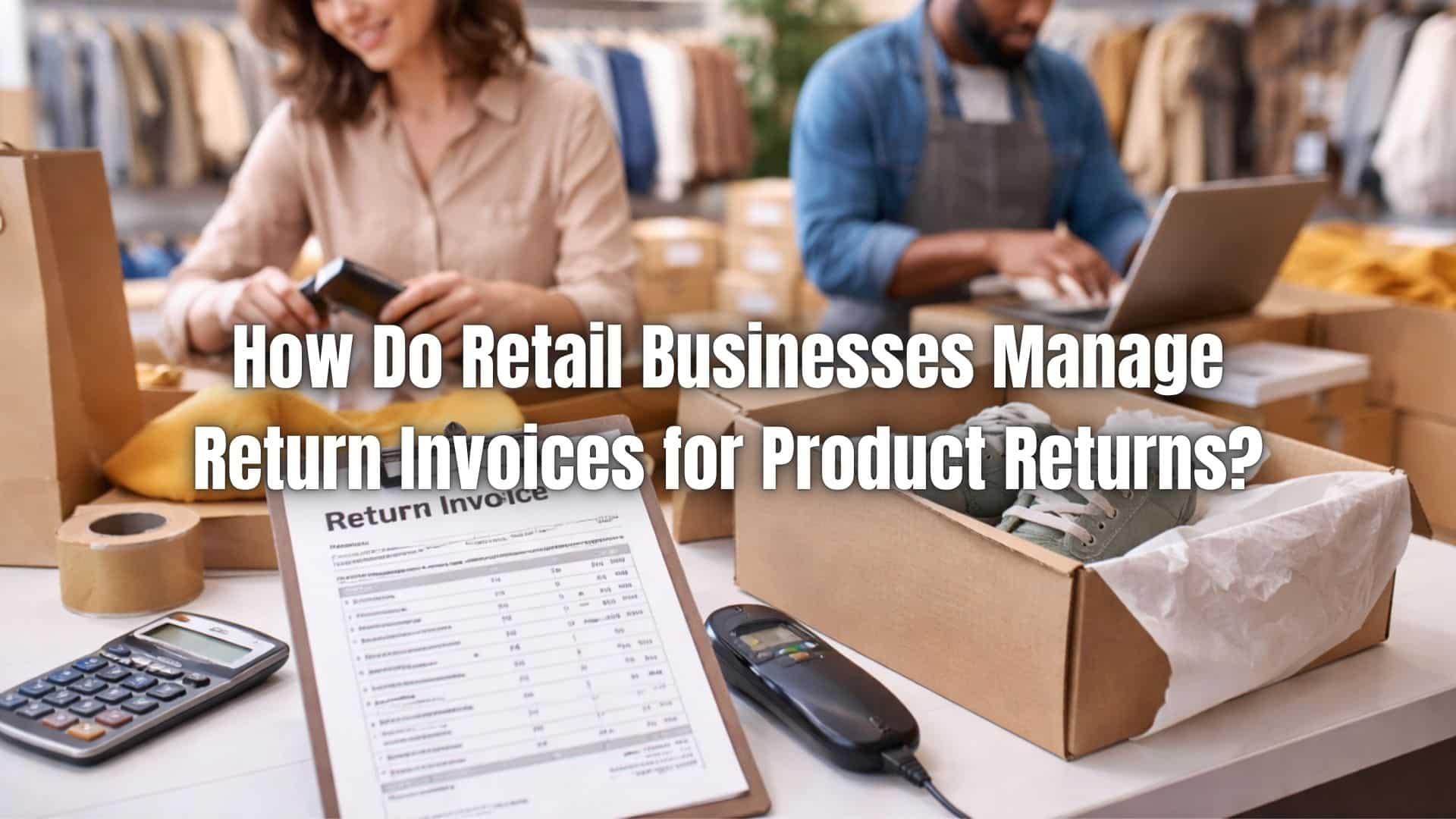
Product returns are an unavoidable part of retail operations, especially with the continued growth of eCommerce and omnichannel shopping. Customers expect flexible return policies, but high return volumes can disrupt inventory, cash flow, and overall profitability. For retail businesses, managing these returns efficiently is critical to maintaining operational stability and customer satisfaction.
A key component of this process is the use of return invoices for retail businesses, which serve as formal documents that record returned goods and adjust billing accordingly. These invoices ensure that refunds, credits, or replacements are properly documented and aligned with the original transaction. Without them, businesses risk discrepancies in financial records and inventory counts.
Efficient return invoice management helps retailers maintain accurate bookkeeping, streamline workflows, and build trust with customers. By implementing structured processes and automation, businesses can reduce errors, speed up refunds, and create a smoother return experience that supports long-term growth.
What Is a Return Invoice in Retail?
A return invoice in retail is a document issued when a customer returns a product, detailing the items returned and the corresponding financial adjustments. It acts as a reversal or modification of the original sales invoice, ensuring that the transaction is accurately updated in both accounting and inventory systems. This is a fundamental part of managing return invoices for retail businesses effectively.
Unlike refunds, which refer to the actual payment returned to the customer, return invoices focus on documenting the transaction adjustment. They also differ from credit notes, which typically provide store credit without directly referencing a specific invoice, and standard invoices, which record initial sales rather than reversals. Each document plays a distinct role, but return invoices ensure traceability and accuracy.
For example, a customer returning a defective product, receiving the wrong item, or canceling an order after shipment would trigger a return invoice. This document ensures that the business properly accounts for the returned goods while maintaining a clear audit trail for future reference.
Why Product Returns Are a Common Retail Challenge
Retail businesses face high return rates, particularly in eCommerce sectors like apparel and electronics. Customers often purchase multiple items with the intention of returning some, making returns a routine yet complex aspect of operations. This trend increases the importance of managing return invoices for retail businesses with precision.
Modern consumers also expect fast and hassle-free return processes, including quick refunds and clear communication. Failing to meet these expectations can lead to dissatisfaction, negative reviews, and lost customer loyalty. As a result, retailers must balance convenience with operational efficiency.
Additionally, returns introduce operational challenges such as tracking items, restocking inventory, and updating financial records. Each return impacts revenue recognition and inventory valuation, making accurate documentation through return invoices essential to avoid costly errors.
How Retail Businesses Manage Return Invoices
Retail businesses typically begin by generating a return invoice whenever a product is returned. This document captures key details such as the item, quantity, reason for return, and associated financial adjustments. Proper generation of return invoices for retail businesses ensures consistency and accountability across transactions.
Next, the return invoice is linked to the original sales invoice, allowing businesses to maintain a clear transaction history. This linkage helps track the lifecycle of each sale and return, reducing confusion and enabling accurate reporting. It also simplifies reconciliation during audits.
Inventory and financial records are then updated in real time to reflect the returned goods and adjusted revenue. Refunds or store credits are processed based on the company’s return policy, ensuring customers receive timely compensation. Maintaining organized documentation throughout this process is critical for compliance and operational transparency.
Key Features of Return Invoice Management Systems
Automated return invoice generation
Automatically creates return invoices as soon as a return is initiated, reducing manual input and ensuring consistent documentation across all transactions.
Integration with inventory and sales systems
Syncs return data with inventory and POS systems, ensuring stock levels and sales records are updated instantly without discrepancies.
Real-time tracking of returns and refunds
Provides live visibility into the status of returned items, pending refunds, and completed transactions for better operational control.
Customer communication and notifications
Sends automated updates to customers return approvals, refund processing, and billing adjustments, improving transparency and trust.
Audit trails for compliance and reporting
Maintains a detailed record of all return transactions, making it easier to comply with financial regulations and prepare for audits.
Customizable return and refund policies
Allows businesses to define rules for returns, such as eligibility periods, restocking fees, and refund methods, ensuring flexibility and control.
Multi-channel return handling
Supports returns from eCommerce platforms, physical stores, and mobile sales channels within a unified system.
Data analytics and reporting tools
Provides insights into return trends, reasons for returns, and financial impact, helping businesses make informed decisions.
The Role of Automation in Handling Product Returns
Automation plays a significant role in improving the efficiency of handling returns. By reducing manual data entry, businesses minimize the risk of human error when creating and processing return invoices. This is especially valuable for retailers dealing with high transaction volumes.
Automated systems can instantly generate return invoices for retail businesses, ensuring that every return is documented accurately and consistently. This reduces delays and allows staff to focus on more strategic tasks rather than repetitive administrative work.
Additionally, automation accelerates refund processing and improves overall workflow efficiency. Retailers can handle large volumes of returns without compromising accuracy, leading to better financial control and enhanced customer satisfaction.
How Recurring Billing Systems Handle Return Adjustments
Recurring billing systems are particularly useful for retailers offering subscriptions or repeat purchase models. When a product is returned, these systems can automatically adjust upcoming invoices to reflect the change. This ensures that customers are not overcharged in future billing cycles.
By integrating return invoices for retail businesses with recurring billing, companies can recalculate charges dynamically. For example, if a subscription box item is returned, the system can reduce the next invoice or apply a credit seamlessly. This eliminates the need for manual corrections.
This level of automation improves billing accuracy and reduces disputes. Customers benefit from transparent adjustments, while businesses maintain consistent revenue tracking without additional administrative burden.
Best Practices for Managing Return Invoices in Retail
Establish clear return and refund policies
Define transparent guidelines for return eligibility, timelines, and refund methods to reduce confusion and disputes.
Ensure accurate documentation of returned items
Capture complete details such as product condition, quantity, and reason for return to maintain reliable records.
Automate return invoice generation and tracking
Use automated systems to handle high volumes of returns efficiently and minimize human error.
Communicate clearly with customers regarding refunds and adjustments
Provide timely updates and clear explanations to keep customers informed throughout the return process.
Link return invoices to original transactions
Maintain traceability by connecting each return invoice to its corresponding sales invoice for accurate reconciliation.
Regularly review return data to identify trends and issues
Analyze return patterns to detect product defects, shipping issues, or policy gaps that need improvement.
Train staff on return handling procedures
Ensure employees understand the correct process for issuing return invoices and managing customer interactions.
Implement quality control checks
Verify returned items before processing refunds to prevent fraud and ensure policy compliance.
How Efficient Return Invoice Management Improves Customer Experience
Efficient management of return invoices for retail businesses directly impacts customer satisfaction. Faster processing of returns and refunds ensures that customers feel valued and confident in their purchases. Transparency in billing adjustments also reduces confusion.
Clear and accurate documentation minimizes disputes, as customers can easily understand how their returns are handled. This builds trust and encourages repeat business, especially in competitive retail markets. A smooth return experience can often be the deciding factor in customer loyalty.
Additionally, a seamless return process across both online and in-store channels enhances the overall shopping experience. Retailers that prioritize efficiency in returns are better positioned to retain customers and strengthen their brand reputation.
Key Benefits of Managing Return Invoices Effectively
- Improves billing accuracy and financial tracking: Ensures all returned transactions are properly recorded, reducing discrepancies in revenue reporting.
- Speeds up return and refund processing: Streamlined workflows allow businesses to process returns quickly, enhancing operational efficiency.
- Reduces administrative workload: Automation minimizes manual tasks, freeing up staff to focus on higher-value activities.
- Enhances customer satisfaction and trust: Fast and transparent return handling builds confidence and encourages repeat purchases.
- Ensures compliance and audit readiness: Proper documentation and tracking make it easier to meet regulatory requirements and pass audits.
- Provides actionable business insights: Return data helps identify product issues, customer behavior patterns, and operational inefficiencies.
- Supports scalable operations: Efficient systems enable businesses to handle increasing return volumes without added complexity.
Common Use Cases
- eCommerce product returns: Customers return items purchased online due to size issues, dissatisfaction, or incorrect orders.
- In-store returns and exchanges: Physical retail locations handle walk-in returns and process exchanges or refunds on the spot.
- Defective or damaged product returns: Items returned manufacturing defects or shipping damage require proper documentation and replacement handling.
- Subscription product adjustments: Recurring orders, such as subscription boxes, require invoice adjustments when items are returned.
- Bulk or wholesale return transactions: Large-volume returns from business clients or distributors need detailed tracking and financial adjustments.
- Order cancellations after shipment: Customers cancel orders post-dispatch, requiring reverse logistics and return invoice processing.
- Seasonal or promotional returns: High return volumes during holidays or sales events require efficient systems to manage spikes.
How ReliaBills Helps Retail Businesses Manage Return Invoices
Retail businesses can significantly streamline their operations by using automated invoicing solutions like ReliaBills. The platform simplifies the creation and management of return invoices, ensuring that every returned product is accurately recorded and aligned with the original transaction. This reduces manual errors, improves efficiency, and helps businesses maintain clean financial records.
One of the standout advantages is its recurring billing functionality, which automatically adjusts future invoices when returns occur. This is particularly useful for subscription-based retail models, where returned items can impact upcoming charges. By automating these adjustments, ReliaBills ensures accurate billing while minimizing disputes and administrative effort.
ReliaBills PLUS further enhances these capabilities with advanced automation, detailed reporting, and robust customer communication tools. Businesses can gain deeper insights into return trends, send real-time updates to customers refunds, and maintain full visibility over their billing processes. These features empower retailers to handle returns at scale while delivering a seamless customer experience.
How to Create a New Recurring Invoice Using ReliaBills
Creating a New Recurring Invoice using ReliaBills involves the following steps:
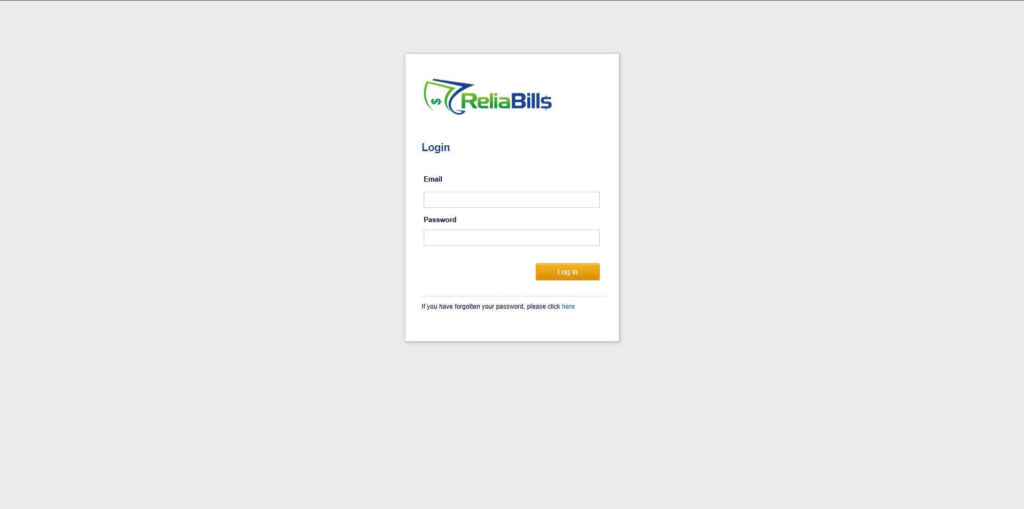
Step 1: Login to ReliaBills
- Access your ReliaBills Account using your login credentials. If you don’t have an account, sign up here.
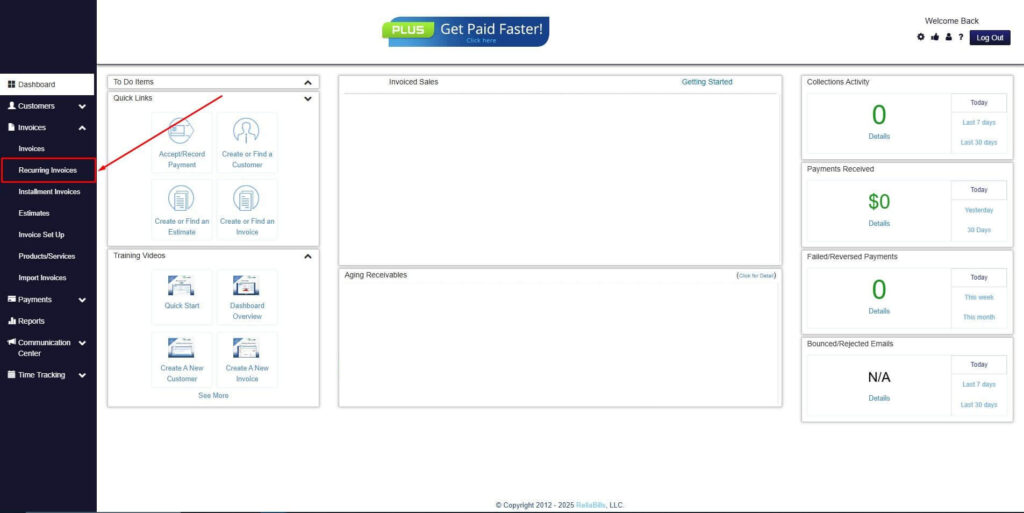
Step 2: Click on Recurring Invoices
- Navigate to the Invoices Dropdown and click on Recurring Invoices for an overview of the list of your existing customers.
Step 3: Go to the Customers Tab
- If you have already created a customer, search for them in the Customers tab and make sure their status is “Active”.
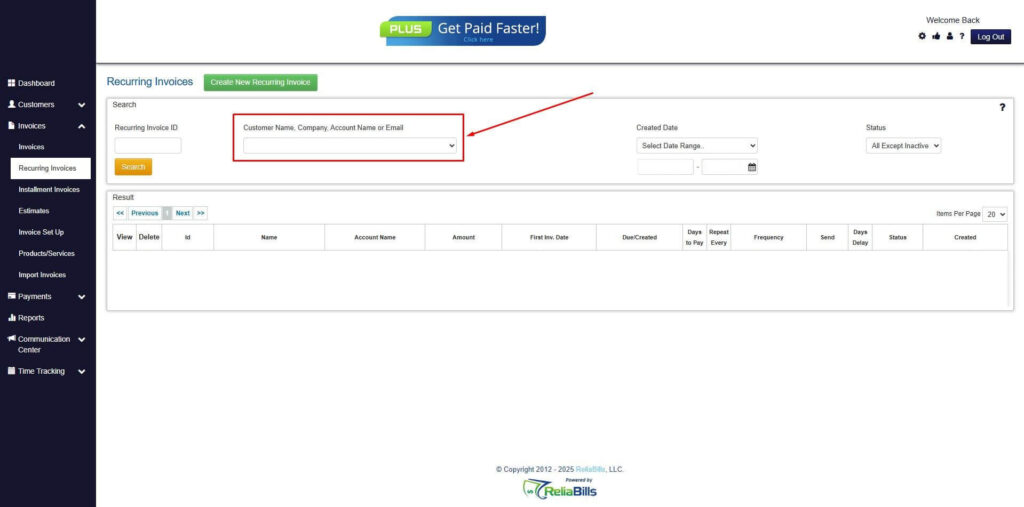
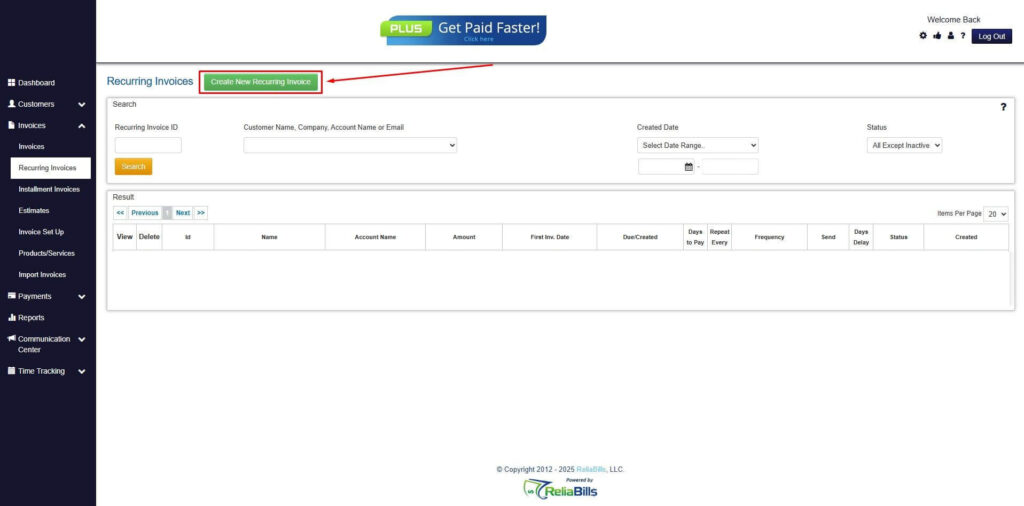
Step 4: Click the Create New Recurring Invoice
- If you haven’t created any customers yet, click the Create New Recurring Invoice to create a new customer.
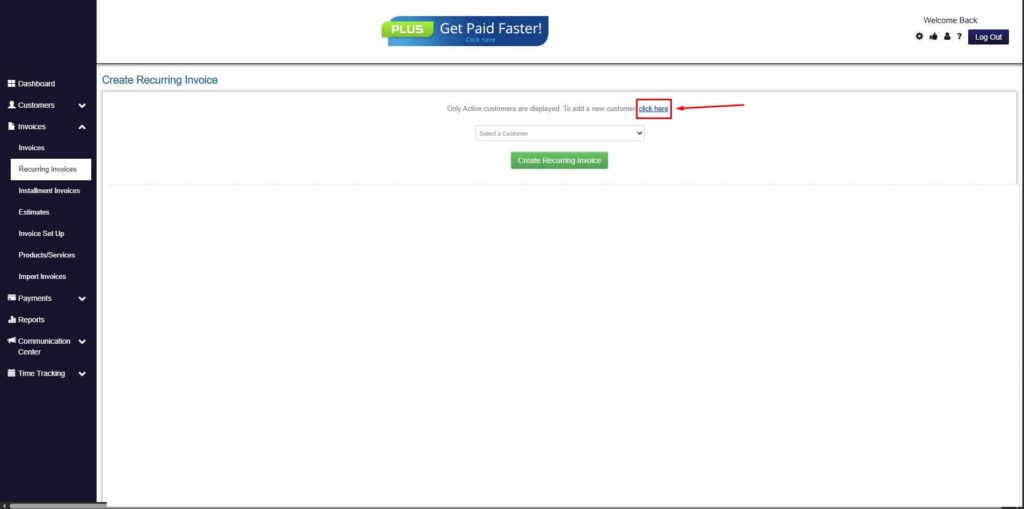
Step 5: Click on the “Click here” Button
- Click on the “Click here” button to proceed with the recurring invoice creation.
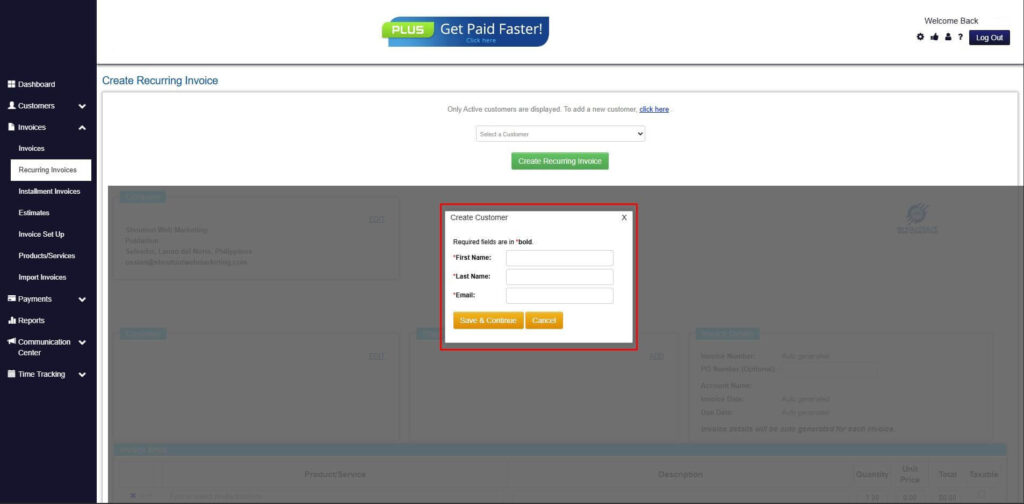
Step 6: Create Customer
- Provide your First Name, Last Name, and Email to proceed.
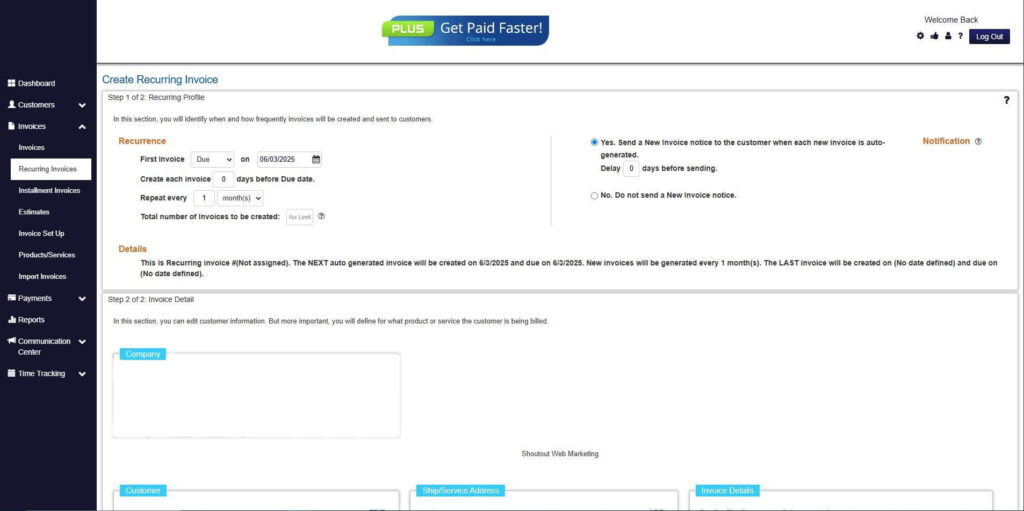
Step 7: Fill in the Create Recurring Invoice Form
- Fill in all the necessary fields.
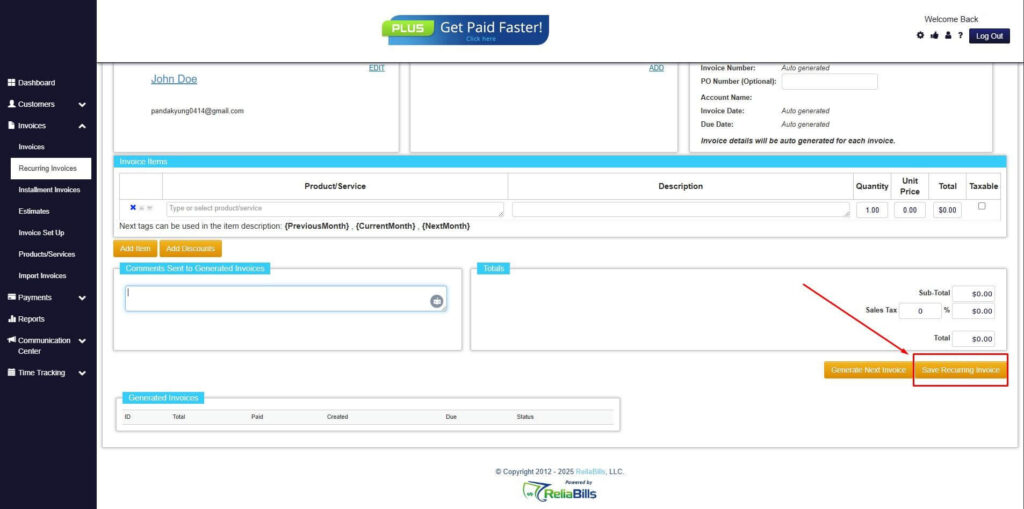
Step 8: Save Recurring Invoice
- After filling up the form, click “Save Recurring Invoice” to continue.
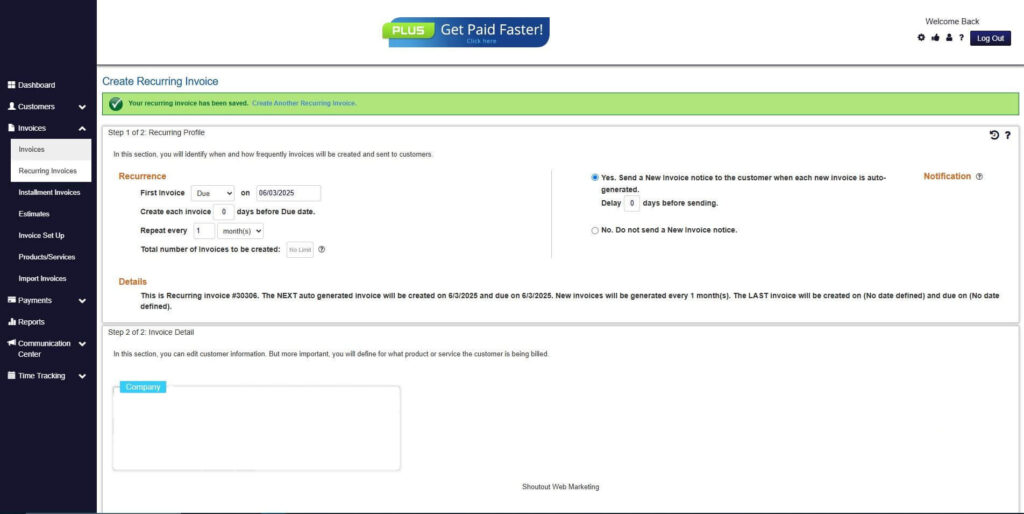
Step 9: Recurring Invoice Created
- Your Recurring Invoice has been created.
Frequently Asked Questions (FAQs)
1. What is a return invoice in retail?
A return invoice is a formal document used to record returned products and adjust the original sale, ensuring accurate accounting and inventory updates.
2. How is a return invoice different from a refund?
A return invoice documents the transaction reversal, while a refund is the actual payment returned to the customer through cash, card, or store credit.
3. Can return invoices be automated?
Yes, modern invoicing systems can automatically generate and process return invoices, improving speed, accuracy, and consistency.
4. How do return invoices affect inventory and accounting?
They increase inventory levels for returned goods and adjust revenue records, ensuring accurate financial statements and stock tracking.
5. How do recurring billing systems handle returned products?
They automatically adjust future invoices or apply credits based on returned items, preventing overbilling.
Conclusion
Managing return invoices for retail businesses is essential for maintaining accurate financial records, efficient operations, and strong customer relationships. As product returns continue to rise, retailers must adopt structured processes to handle them effectively.
Automation and recurring billing systems play a critical role in simplifying return management by reducing errors, accelerating refunds, and ensuring accurate billing adjustments. These technologies enable businesses to handle returns at scale without sacrificing efficiency or customer satisfaction.
Looking ahead, retailers that invest in digital invoicing solutions will be better equipped to navigate the complexities of returns. By optimizing return invoice management, businesses can improve profitability, enhance customer trust, and stay competitive in an evolving retail landscape.