

Cash flow is a persistent challenge for construction businesses, particularly on projects with long timelines and milestone-based payments. Delayed client payments often force companies to stretch resources or delay critical purchases, which can slow progress and reduce profitability. Invoice discounting for construction provides an effective solution by allowing businesses to access funds tied up in unpaid invoices. By combining this approach with automated and recurring billing, companies can maintain accurate invoicing, reduce administrative work, and improve overall financial stability.
Accessing working capital through invoice discounting helps construction firms pay for labor, materials, and subcontractor services without relying solely on loans or credit lines. This reduces financial stress and allows teams to focus on project execution rather than chasing late payments. Automation ensures invoices are accurate, complete, and issued on time, which strengthens eligibility for early financing. When invoices are predictable and error-free, financing providers are more likely to approve advance funding quickly.
What Is Invoice Discounting?
Invoice discounting allows businesses to convert unpaid invoices into immediate working capital. Unlike invoice factoring, which transfers control of the sales ledger to a third-party financier, invoice discounting keeps customer relationships in the business’s hands. This means firms can manage collections and interactions while still receiving funds upfront. Accessing early funds reduces reliance on traditional loans and mitigates the financial risks associated with long payment cycles.
The process works by submitting invoices to a financing provider, who releases a percentage of the invoice value immediately. The remaining balance is paid once the client settles the invoice. This approach provides confidential financing, keeping the arrangement invisible to clients while giving companies flexibility to cover operational costs. For construction businesses, this means uninterrupted project progress and improved liquidity without affecting client trust.
Invoice discounting also enables businesses to better forecast cash flow and allocate resources efficiently. When combined with automated and recurring invoicing, invoices are generated accurately and consistently, making them more finance-ready. Automated systems ensure that invoices are delivered promptly and tracked in real time, which reduces errors and strengthens the reliability of the financing process. Overall, invoice discounting provides a scalable and controlled method for unlocking working capital in construction projects.
Why Construction Businesses Face Cash Flow Gaps
Construction projects are inherently complex and often require significant upfront investment in materials, labor, and equipment. Long project timelines, combined with milestone-based payments, can leave businesses with limited liquidity between payment cycles. This gap can delay purchases, slow project execution, and strain relationships with subcontractors and suppliers.
Client payment delays add another layer of complexity. Even when invoices are submitted on time, approvals, internal processing, or disputes can slow payments significantly. For smaller firms, this unpredictability can jeopardize ongoing operations. Maintaining a reliable cash flow is critical to ensure all project obligations are met promptly.
Retention payments and contractual terms further impact cash availability. Contracts often retain a portion of payment until project completion, leaving businesses with a reduced working capital buffer. These financial constraints make it clear why alternative solutions, such as invoice discounting, are essential. By converting outstanding invoices into immediate funds, companies can bridge the gap between operational costs and incoming payments.
How Invoice Discounting Supports Project Financing
Invoice discounting provides construction businesses with immediate access to cash tied up in outstanding invoices. This ensures that projects continue without interruptions due to delayed payments. With early access to funds, companies can pay laborers, purchase materials, and manage operational costs while waiting for client settlements.
This approach reduces reliance on traditional loans and credit lines, helping businesses avoid interest costs and additional debt. Firms can reinvest funds into new or ongoing projects, supporting growth and continuity. Invoice discounting also allows businesses to manage cash flow more predictably, improving operational planning and resource allocation.
Additionally, invoice discounting increases financial flexibility. Companies can respond quickly to unforeseen expenses, such as equipment repairs or supply shortages, without halting project progress. By maintaining steady cash flow, firms can meet deadlines, keep clients satisfied, and strengthen their competitive position in the market.
Key Features of Invoice Discounting for Construction
Access to a Percentage of Invoice Value Upfront
Construction businesses can receive a portion of their invoice value immediately, enabling them to cover labor, materials, and operational costs without waiting for client payments. This feature ensures projects continue smoothly even when client payment cycles are long. Immediate cash injection helps maintain financial stability during critical project phases.
Confidential Financing Without Customer Involvement
Invoice discounting is handled discreetly, meaning clients are unaware of the financing arrangement. This protects business relationships while providing access to working capital. Companies retain full control over communications and collections with their clients.
Flexible Funding Based on Invoice Volume
Funding scales according to the number and value of outstanding invoices, making it ideal for firms managing multiple projects or large contracts simultaneously. This ensures businesses can access the right amount of capital when needed. Flexibility allows companies to respond to unexpected project expenses.
Retained Control Over Customer Relationships
Unlike factoring, businesses maintain direct interactions with clients, fostering trust and transparency. Control over collections allows businesses to manage disputes or negotiations directly. This helps preserve long-term client relationships while using invoice financing.
Scalable Financing Aligned with Project Growth
As construction businesses take on more or larger projects, invoice discounting can scale accordingly. This ensures funding capacity grows alongside business operations. Scalability supports sustainable growth without reliance on traditional loans.
Integration with Project Management and Accounting Systems
Linking invoice discounting with ERP or billing systems ensures invoices are accurate, timely, and finance-ready. Automation reduces errors and administrative effort, making it easier to access funds quickly. Real-time data improves forecasting and planning.
The Role of Automated and Recurring Billing in Invoice Discounting
Automated invoicing reduces manual errors, ensuring that all invoices are accurate and compliant, which increases financing approval rates. Recurring billing is particularly useful for milestone-based or ongoing maintenance contracts, providing predictable, consistent invoices. This reliability strengthens a business’s case when seeking early funds through invoice discounting.
Recurring billing ensures invoices are issued consistently on predetermined schedules. Businesses can align invoicing with project milestones, making funding predictable and easier to manage. Automation also tracks invoice status and payment history in real time, allowing finance teams to quickly identify outstanding invoices ready for discounting.
By combining automation with recurring billing, construction firms minimize administrative workloads while maximizing access to financing. Accurate and timely invoices not only improve eligibility for invoice discounting but also enhance cash flow planning. This integration ensures operational stability while maintaining control over client relationships.
Best Practices for Using Invoice Discounting Effectively
Maintain Accurate and Timely Invoicing Records
Ensure all invoices include correct project details, client information, and payment terms. Accurate records increase approval chances with financiers and reduce delays. Timely submission of invoices ensures faster access to funds.
Work with Reputable Financing Providers
Partner with trusted invoice discounting firms to minimize risks and streamline the funding process. Experienced providers can offer guidance on eligibility and payment terms. Reliability of the provider ensures smooth cash flow operations.
Monitor Customer Payment Behavior and Creditworthiness
Understanding which clients are most likely to pay on time helps plan funding strategies. This reduces the risk of relying on discounting for problematic invoices. Monitoring also informs credit policies for future projects.
Align Invoicing Schedules with Project Milestones
Issue invoices that correspond with completed project phases to maintain a steady cash flow. Milestone-based invoicing supports smoother project financing. Consistency strengthens relationships with financiers and improves eligibility for early payments.
Integrate Invoicing Systems with Financial Management Tools
Automated systems reduce manual work, improve accuracy, and provide real-time visibility of invoices eligible for discounting. Integration allows for better cash flow forecasting and reporting. It also ensures all invoices are consistent and finance-ready.
Review and Audit Invoice Data Regularly
Periodic audits ensure all invoice details are correct, reducing the chance of financing delays or disputes. Continuous review strengthens compliance and improves trust with funding partners. It also helps identify opportunities to optimize cash flow further.
How Digital Invoicing Improves Financing Opportunities
Digital invoicing allows construction businesses to submit invoices quickly and securely for financing purposes. Electronic delivery reduces delays and ensures that invoices reach clients and financiers promptly. Real-time tracking provides transparency, making it easier for finance providers to approve funding.
Digital invoices also standardize invoice formats and reduce errors. This consistency improves credibility with financing providers, increasing the likelihood of early funding. Automation further ensures invoices include all required details, such as payment terms, client information, and project references.
Finally, digital invoicing enables businesses to efficiently monitor outstanding payments and track fund usage. Finance teams can quickly identify which invoices are eligible for discounting and prioritize accordingly. By combining digital invoicing with automated and recurring billing, construction firms can maximize the benefits of invoice discounting for construction while reducing administrative burdens.
Key Benefits of Invoice Discounting for Construction Businesses
Improves Cash Flow During Long Project Cycles
Accessing early funds ensures that projects can progress without delays caused by client payment cycles. This is particularly valuable for long-term or large-scale projects. Steady cash flow enables timely payments to suppliers, subcontractors, and employees.
Reduces Reliance on Traditional Financing
Businesses can avoid high-interest loans or revolving credit lines. Invoice discounting provides working capital without increasing debt levels. This reduces financial stress and preserves credit capacity for other investments.
Enables Timely Payment of Labor and Suppliers
Immediate access to funds ensures that workforce and material suppliers are paid on schedule. Reliable payments strengthen vendor relationships and prevent project interruptions. On-time payments also improve staff satisfaction and retention.
Supports Project Continuity and Growth
Early access to cash allows businesses to reinvest in ongoing projects or new opportunities. This ensures projects are delivered on schedule and supports overall business expansion. Continuous financing flexibility helps firms take on larger contracts confidently.
Enhances Financial Flexibility
Companies can handle unexpected costs, such as material price changes or urgent equipment needs, without halting operations. Flexibility also reduces dependency on emergency credit solutions. Smooth operations contribute to better client satisfaction and reputation.
Strengthens Financial Planning and Forecasting
Reliable access to working capital allows better budgeting and resource allocation across projects. Companies can plan for upcoming expenses, reducing surprises and improving operational efficiency. Predictable cash flow helps identify areas for growth and cost optimization.
Common Use Cases
Large-Scale Construction Projects with Milestone Billing
Financing is aligned with project milestones, providing consistent liquidity while waiting for client payments. This ensures uninterrupted progress and resource availability.
Subcontractors Managing Delayed Client Payments
Small or medium subcontractors can maintain operations and meet obligations even when clients delay payments. Invoice discounting helps them manage cash flow without relying on bank loans.
Infrastructure and Government-Funded Projects
Projects with long approval and payment cycles benefit from predictable early funding. Financing ensures material and labor costs are covered while waiting for official disbursements.
Ongoing Maintenance and Service Contracts
Recurring service agreements can be funded via invoice discounting, ensuring operational continuity. Steady cash flow supports maintenance schedules and staff deployment.
Multi-Project Construction Firms Needing Steady Cash Flow
Companies handling multiple contracts simultaneously can fund resources and equipment for all projects without strain. Invoice discounting provides a unified solution for managing finances efficiently.
Contract-Based Materials Supply
Suppliers can finance material procurement costs using unpaid invoices, preventing delays in project execution. This enables businesses to meet client timelines consistently.
How ReliaBills Helps Construction Businesses Optimize Invoice Discounting
ReliaBills streamlines invoicing for construction businesses, helping companies reduce administrative work and improve cash flow visibility. By automating invoice creation and delivery, teams spend less time on manual data entry and can focus on project execution. Accurate, timely invoices also ensure that companies are always finance-ready, improving eligibility for invoice discounting and other working capital solutions.
With recurring billing and automation features, ReliaBills ensures invoices align with project milestones, contracts, and client payment schedules. Auto-generated invoices, scheduled reminders, and integrated payment options reduce the risk of late or missed payments. Construction businesses can confidently manage multiple projects, subcontractors, and service contracts without worrying about invoice delays or errors.
ReliaBills PLUS takes automation further with advanced reporting, workflow management, and real-time financial tracking. Users can monitor outstanding invoices, track discounting opportunities, and generate detailed analytics to plan cash flow more effectively. With centralized control over invoicing, recurring billing, and financing readiness, construction firms gain operational efficiency and financial stability, enabling them to take on larger projects and grow sustainably.
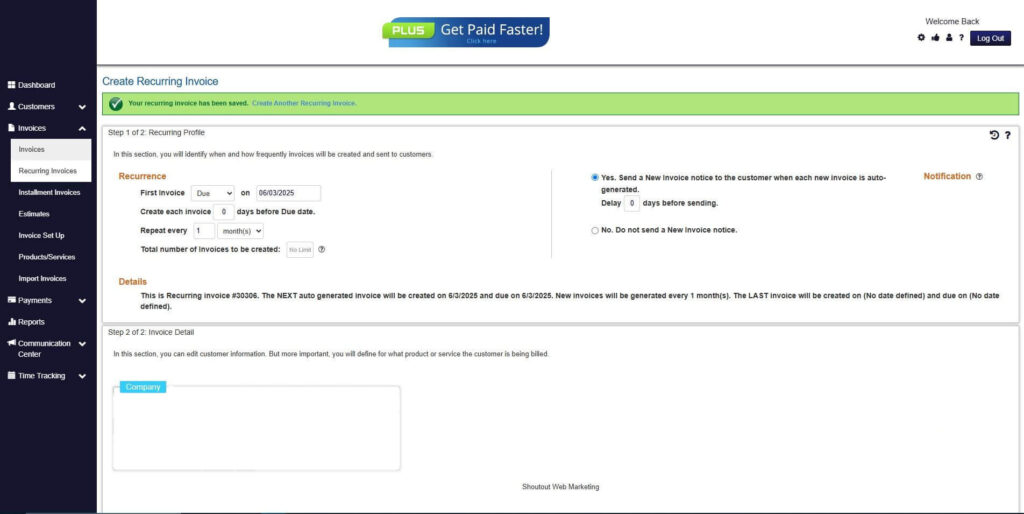
How to Create a New Recurring Invoice Using ReliaBills
Creating a New Recurring Invoice using ReliaBills involves the following steps:
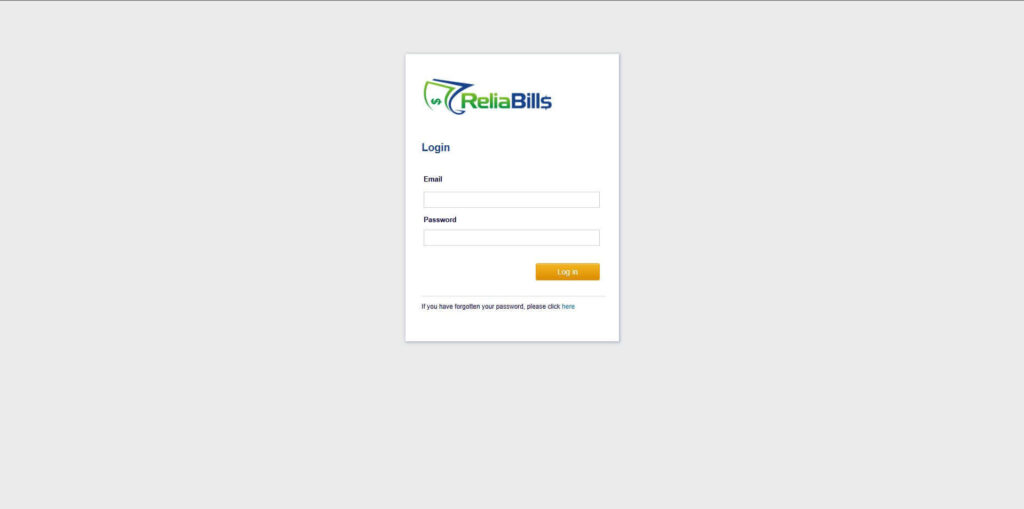
Step 1: Login to ReliaBills
- Access your ReliaBills Account using your login credentials. If you don’t have an account, sign up here.
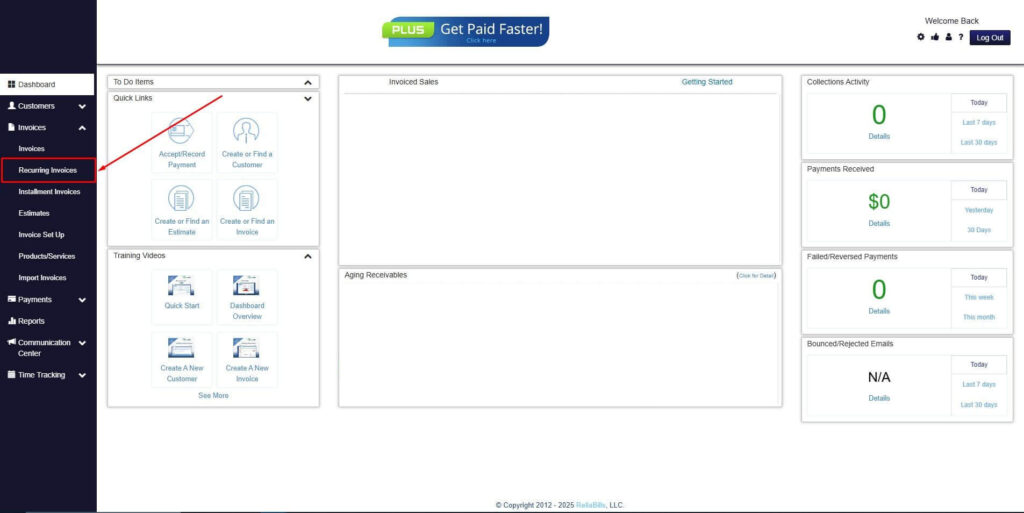
Step 2: Click on Recurring Invoices
- Navigate to the Invoices Dropdown and click on Recurring Invoices for an overview of the list of your existing customers.
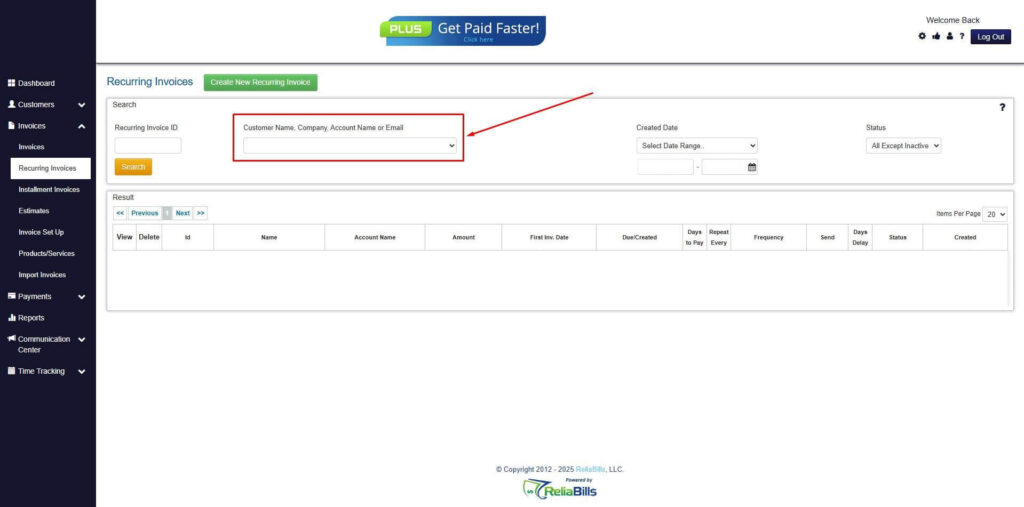
Step 3: Go to the Customers Tab
- If you have already created a customer, search for them in the Customers tab and make sure their status is “Active”.
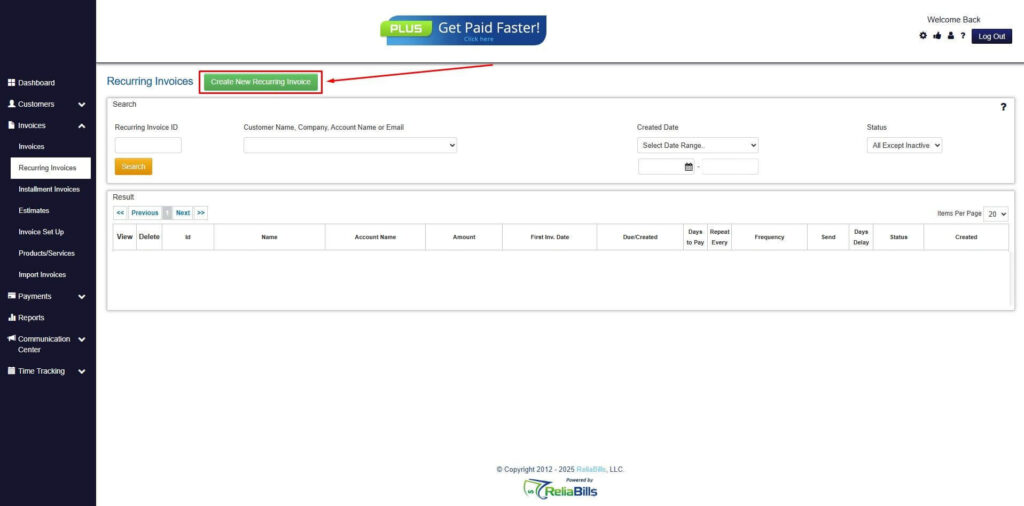
Step 4: Click the Create New Recurring Invoice
- If you haven’t created any customers yet, click the Create New Recurring Invoice to create a new customer.
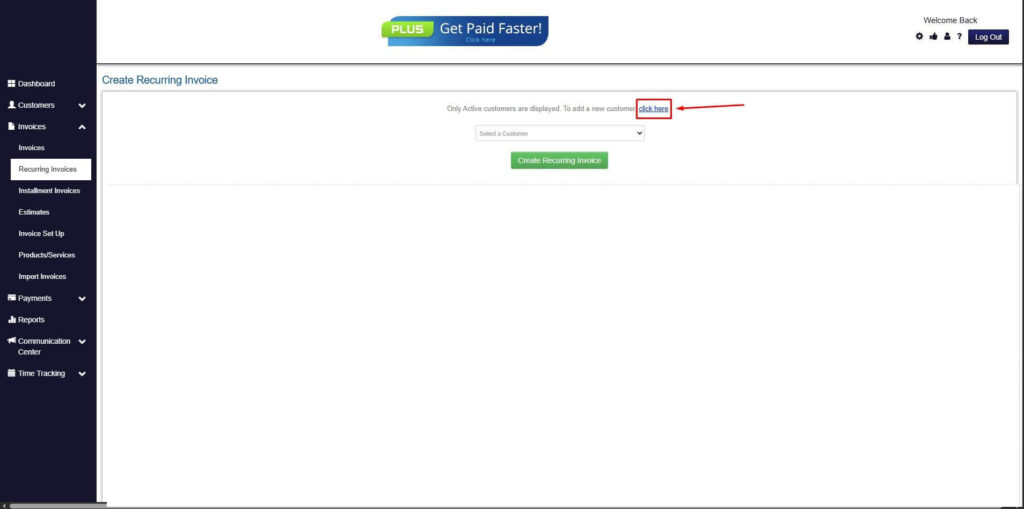
Step 5: Click on the “Click here” Button
- Click on the “Click here” button to proceed with the recurring invoice creation.
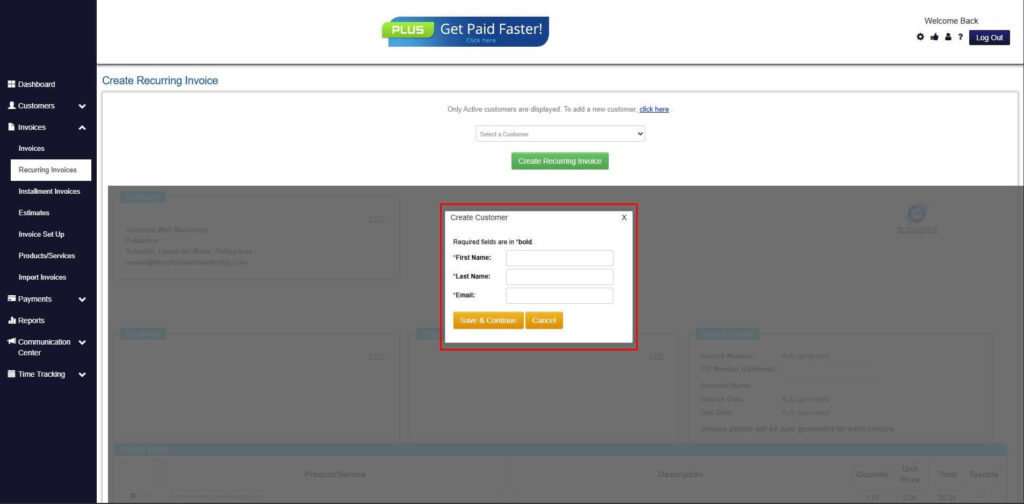
Step 6: Create Customer
- Provide your First Name, Last Name, and Email to proceed.
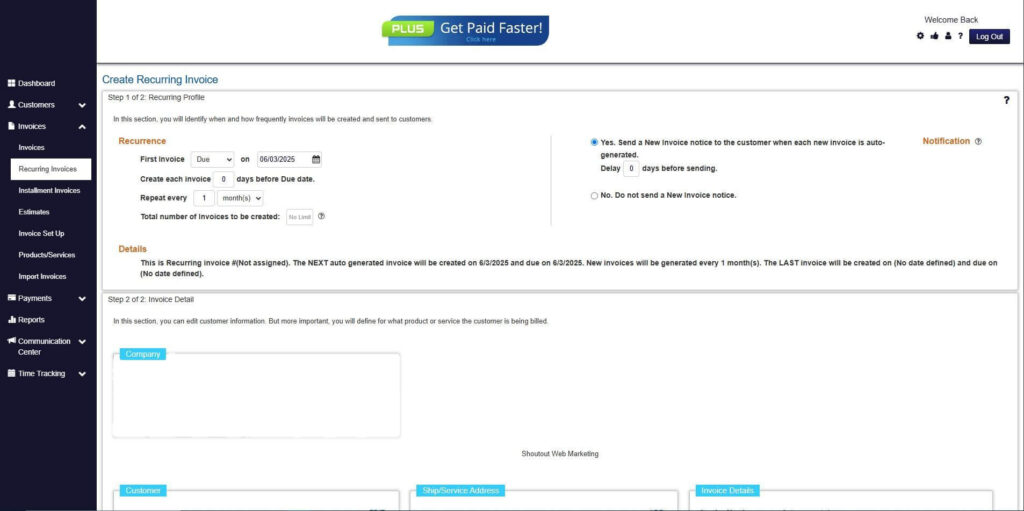
Step 7: Fill in the Create Recurring Invoice Form
- Fill in all the necessary fields.
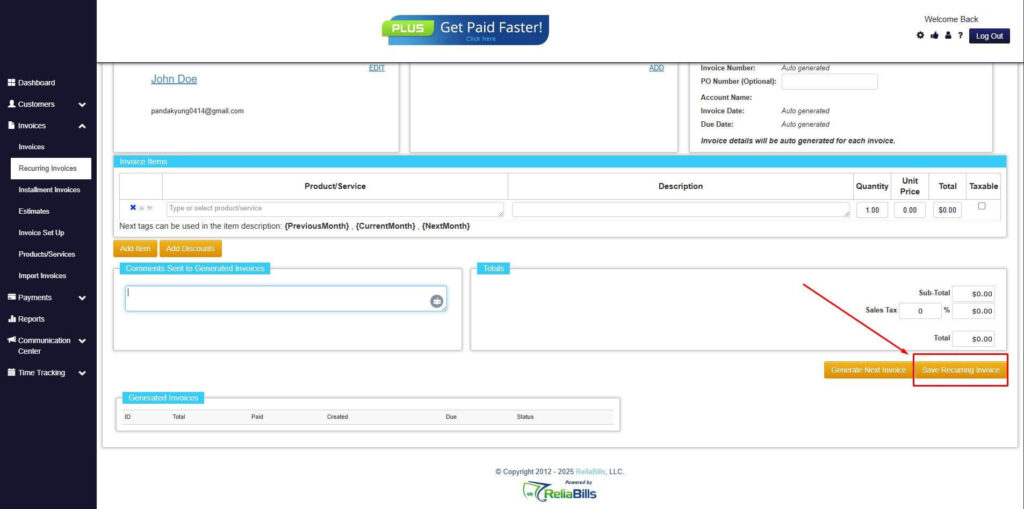
Step 8: Save Recurring Invoice
- After filling up the form, click “Save Recurring Invoice” to continue.
Step 9: Recurring Invoice Created
- Your Recurring Invoice has been created.
Frequently Asked Questions (FAQs)
1. How does invoice discounting work in construction projects?
Unpaid invoices are converted into immediate cash while the business retains control of collections. This allows project operations to continue without waiting for client payments.
2. What is the difference between invoice discounting and factoring?
Factoring transfers control of invoices to the financing company, whereas invoice discounting keeps client relationships with the business. Discounting provides confidential access to funds while maintaining control.
3. Is invoice discounting suitable for small construction businesses?
Yes, it helps small firms maintain working capital without taking on high-interest loans. Even businesses with limited resources can benefit from faster access to cash.
4. How do recurring invoices impact financing eligibility?
Consistent, predictable invoicing improves credibility and strengthens approval chances for invoice discounting. Milestone-based or recurring billing makes invoices finance-ready.
5. What risks should businesses consider when using invoice discounting?
Companies should consider financing costs, the possibility of late client payments, and overreliance on early funding. Proper planning and monitoring mitigate these risks while maximizing benefits.
Conclusion
Invoice discounting offers construction businesses a flexible and efficient way to manage cash flow and finance projects. Accurate, automated, and recurring invoices make early funding easier to obtain, supporting operational stability and growth. By leveraging digital invoicing tools like ReliaBills, companies can streamline project financing, reduce administrative burdens, and maintain strong client relationships. Adopting these solutions ensures projects are completed on time, cash flow remains predictable, and businesses are positioned for long-term success.