

For small businesses, maintaining steady cash flow is essential to covering operational expenses, paying employees, and investing in growth. Late or unpaid invoices can disrupt this balance, creating financial stress and operational bottlenecks. Overdue invoices are more than just accounting headaches they can affect the entire health of a business, from working capital to vendor relationships.
Small businesses often face the challenge of managing multiple clients with varying payment terms. When invoices become overdue, it introduces unpredictability in revenue forecasting and may force businesses to rely on short-term credit to meet obligations. Understanding the causes and impacts of overdue invoices is crucial to implementing effective management strategies.
Automation and structured billing processes are becoming vital tools for small businesses. By streamlining invoicing, sending timely reminders, and tracking payments digitally, companies can reduce late payments, improve cash flow predictability, and maintain strong client relationships.
What Is an Overdue Invoice?
An overdue invoice is a bill that has passed its agreed-upon payment due date without receiving full payment from the customer. While a due date marks when a payment is expected, an invoice officially becomes overdue the moment it is unpaid past that date.
Small businesses typically set payment terms such as Net 15, Net 30, or Net 60, which define how many days a client has to pay. Failure to adhere to these terms results in overdue status, which can affect accounting records and cash flow planning.
Overdue invoices can also differ based on contract types or service agreements. For instance, recurring invoices for subscription-based services might become overdue repeatedly, compounding financial challenges for small businesses and increasing the need for automated tracking systems.
Why Do Invoices Become Overdue?
- Client Cash Flow Issues – Some customers experience their own financial constraints, delaying payment even when invoices are valid.
- Disputed Charges – Misunderstandings regarding pricing, service quality, or contract terms can result in delayed payments.
- Manual Billing Errors – Typos, missing line items, or incorrect totals can create confusion and push payments past due dates.
- Forgotten or Missed Reminders – Without automated reminders, clients may overlook payment deadlines, leading to overdue status.
These challenges highlight the importance of proactive invoice management, clear communication, and reliable follow-up processes.
What Is the Immediate Financial Impact of Overdue Invoices?
Overdue invoices delay revenue collection, leaving small businesses with less working capital to cover operational needs such as payroll, rent, and supply expenses. This shortfall can force businesses to rely on credit lines or loans, increasing interest costs and financial risk.
Late payments may also disrupt budgeting and forecasting. Small businesses depend on predictable cash flow to make strategic decisions, and overdue invoices introduce uncertainty that can limit growth opportunities or force difficult short-term compromises.
Additionally, frequent overdue payments can erode client trust and impact relationships with suppliers or partners. Businesses may struggle to negotiate favorable terms if cash flow appears inconsistent, further amplifying the negative financial impact.
What Are the Long-Term Effects on Business Stability?
Chronic overdue invoices can create cash flow volatility that undermines long-term business sustainability. Unpredictable revenue streams make it difficult to plan for expansion, marketing investments, or new hires.
Persistent late payments may also strain vendor relationships. Suppliers might delay shipments, change payment terms, or reduce credit limits, which can disrupt operations.
Over time, repeated overdue invoices increase the risk of bad debt. Accounts that remain unpaid for extended periods may need to be written off, directly impacting profitability and financial reporting accuracy.
What Are the Hidden Administrative Costs of Overdue Invoices?
- Time Spent on Follow-Ups – Employees must repeatedly contact clients to request payment, diverting time from revenue-generating tasks.
- Manual Tracking of Receivables – Without automation, managing overdue accounts requires spreadsheets, increasing the risk of errors.
- Reconciliation Errors – Inconsistent records complicate monthly accounting and can result in disputes.
- Higher Accounting Workload – Additional labor hours are required to identify, monitor, and report overdue invoices.
Small businesses face both financial and operational costs from overdue invoices, making prevention and automation critical.
How Do Overdue Invoices Affect Customer Relationships?
Overdue invoices can create friction between businesses and clients. Payment disputes, late fees, or service interruptions may reduce trust and negatively affect loyalty.
Clients may become frustrated if invoicing processes are unclear or inconsistent, which can lead to churn. Businesses risk losing repeat customers or damaging their reputation in competitive markets.
Transparent communication, predictable billing schedules, and professional invoicing can prevent misunderstandings and maintain positive relationships, even when payments are delayed.
How Can Small Businesses Prevent Overdue Invoices?
- Establish clear payment terms upfront in contracts and agreements.
- Ensure accurate and timely invoicing for every client interaction.
- Implement structured billing schedules to reduce gaps between services and billing.
- Maintain consistent communication with clients, including reminders and confirmations.
Proactive strategies reduce the occurrence of overdue invoices and strengthen business cash flow.
What Role Do Recurring Invoices Play in Reducing Delays?
Recurring invoices automate the process of sending bills at scheduled intervals. This reduces reliance on manual processes, ensuring that invoices are sent on time every cycle.
Automated recurring billing improves revenue predictability, allowing small businesses to better plan expenses and forecast cash flow. It also minimizes human error, ensuring accurate amounts and proper documentation.
By providing clients with consistent billing schedules, businesses can build trust and reduce the chances of late or missed payments, stabilizing income over time.
How Can Automation Help With Payment Reminders and Collections?
- Scheduled Reminder Emails – Automatic alerts notify clients of upcoming or overdue payments.
- Escalation Workflows – If an invoice remains unpaid, automated systems trigger secondary reminders or managerial notifications.
- Auto-Debit Options – Customers can have payments automatically deducted on due dates, reducing late payments.
- Real-Time Payment Tracking – Businesses can instantly monitor which invoices are pending, paid, or overdue.
Automation simplifies collections while maintaining professional and timely communication with clients.
How Can Accounts Receivable Management Be Improved?
Automation provides aging reports and dashboard visibility to help small businesses identify overdue invoices quickly.
Payment performance analytics enable informed decision-making regarding credit terms, customer risk, and cash flow planning.
Forecasting tools use historical payment trends to predict revenue availability, allowing proactive financial management and reducing dependency on external financing.
How Can Cash Flow Stability Be Strengthened?
Faster invoice delivery through automation reduces days sales outstanding (DSO) and ensures revenue is received promptly.
Consistent tracking of incoming payments stabilizes cash flow, helping businesses plan for payroll, inventory purchases, and operating expenses.
Reliable financial visibility also enhances planning and budgeting, allowing small businesses to grow sustainably while avoiding cash flow shortfalls caused by overdue invoices.
How ReliaBills Helps Reduce Overdue Invoices
ReliaBills streamlines overdue invoice management by providing automated recurring billing for small businesses. The platform allows invoices to be scheduled based on contract or subscription terms, ensuring bills are sent consistently without manual intervention. This reduces late payments while keeping revenue predictable and operations running smoothly.
With recurring billing integration, ReliaBills automatically adjusts invoice amounts for subscription changes, prorated periods, or contract modifications. Businesses can also benefit from digital invoice delivery and branded communication, keeping clients informed with professional, clear invoices while minimizing follow-up efforts. Real-time reporting and receivables tracking provide instant visibility into outstanding payments, helping managers address potential delays proactively.
Designed to reduce administrative workload and errors, ReliaBills centralizes all invoice data in one platform. Small businesses can monitor cash flow, track overdue invoices, and generate automated reminders without additional staffing. By combining automation, recurring billing, and digital communication, ReliaBills ensures small businesses maintain healthy cash flow, stronger client relationships, and more reliable revenue collection.
How to Create a New Recurring Invoice Using ReliaBills
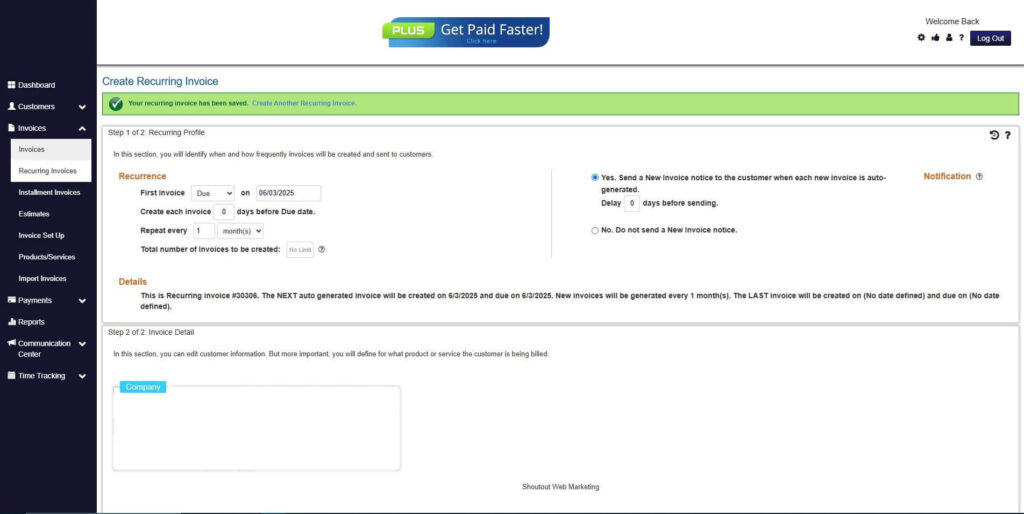
Creating a New Recurring Invoice using ReliaBills involves the following steps:
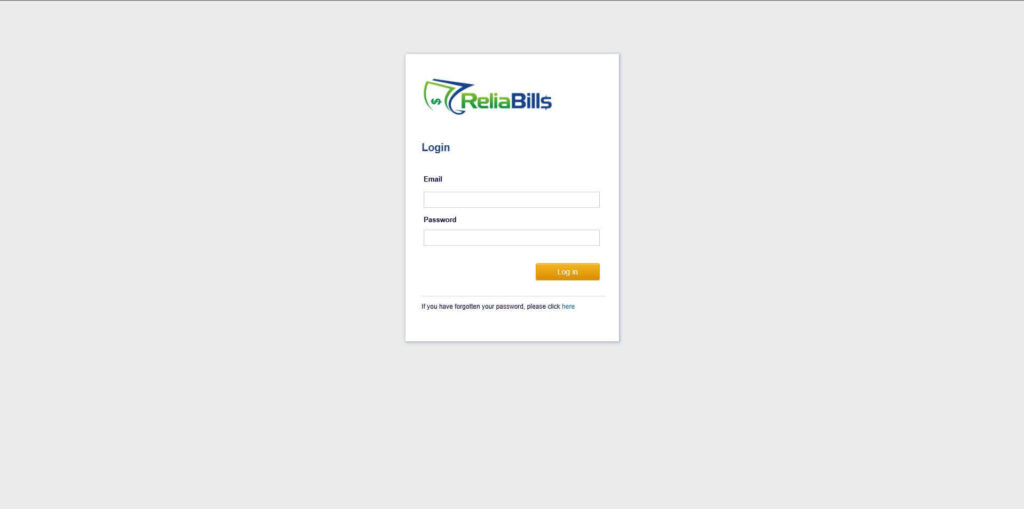
Step 1: Login to ReliaBills
- Access your ReliaBills Account using your login credentials. If you don’t have an account, sign up here.
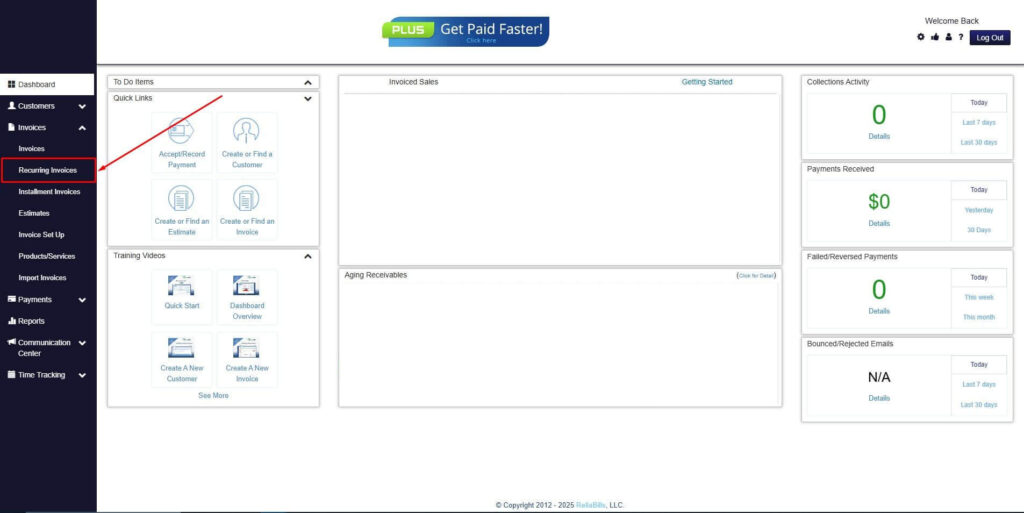
Step 2: Click on Recurring Invoices
- Navigate to the Invoices Dropdown and click on Recurring Invoices for an overview of the list of your existing customers.
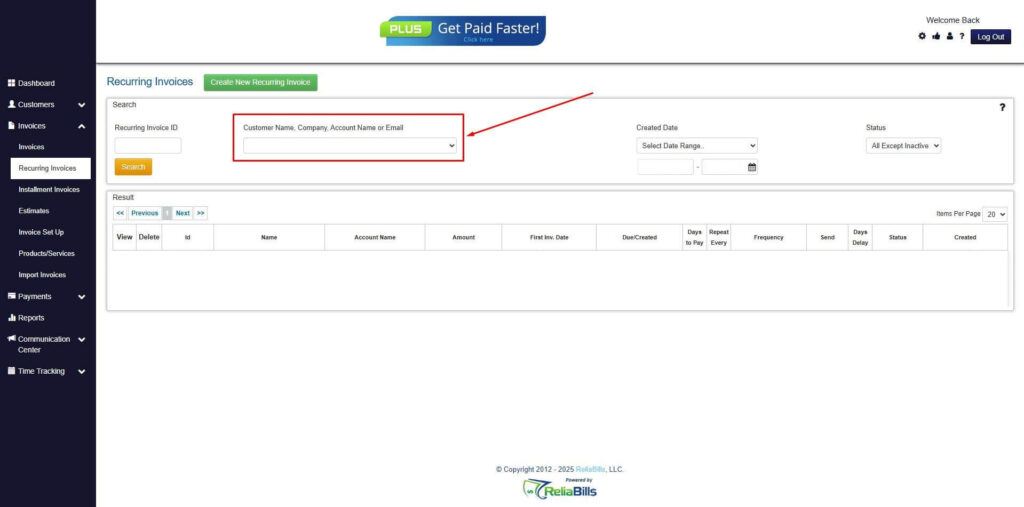
Step 3: Go to the Customers Tab
- If you have already created a customer, search for them in the Customers tab and make sure their status is “Active”.
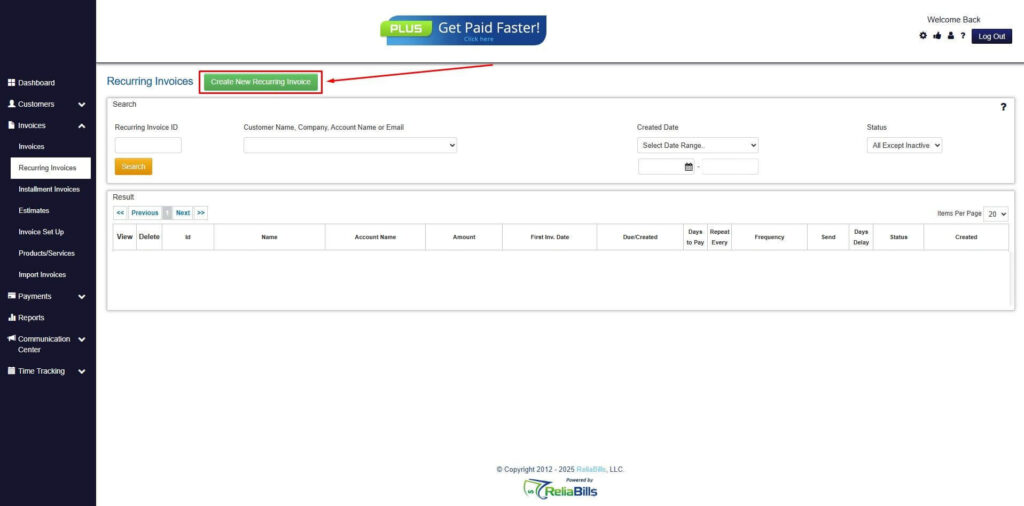
Step 4: Click the Create New Recurring Invoice
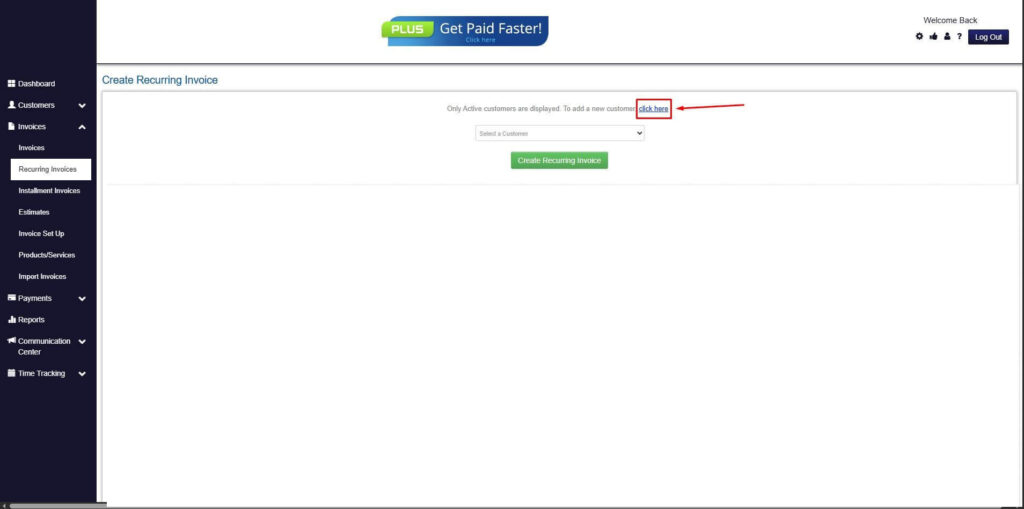
- If you haven’t created any customers yet, click the Create New Recurring Invoice to create a new customer.
Step 5: Click on the “Click here” Button
- Click on the “Click here” button to proceed with the recurring invoice creation.
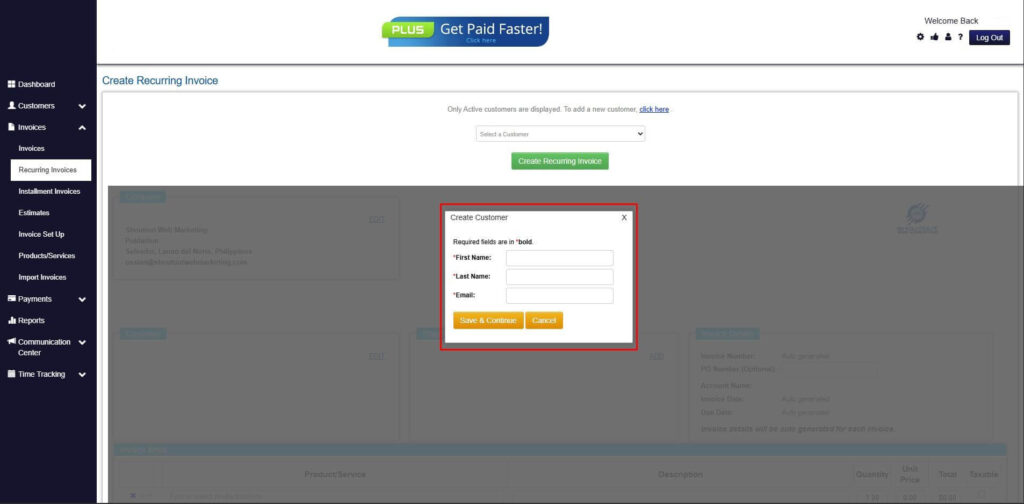
Step 6: Create Customer
- Provide your First Name, Last Name, and Email to proceed.
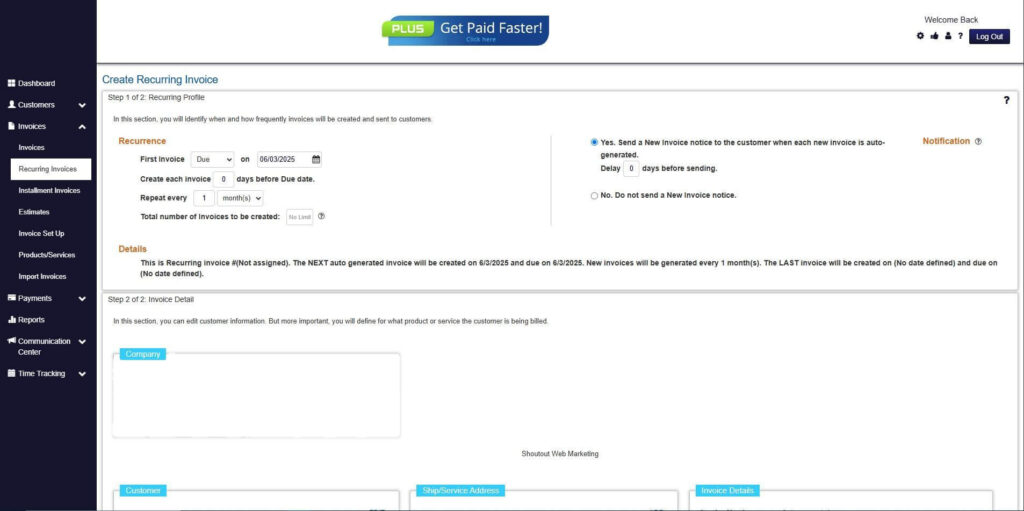
Step 7: Fill in the Create Recurring Invoice Form
- Fill in all the necessary fields.
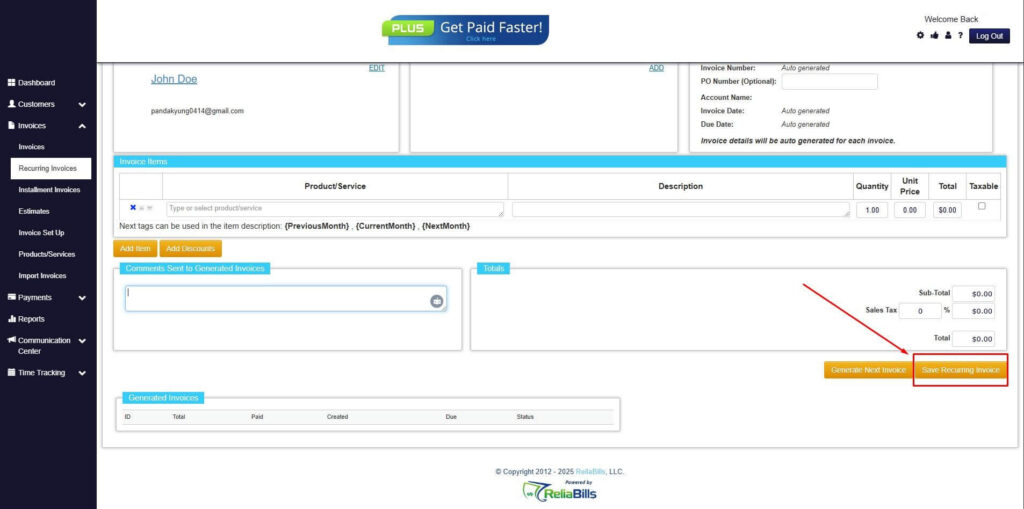
Step 8: Save Recurring Invoice
- After filling up the form, click “Save Recurring Invoice” to continue.
Step 9: Recurring Invoice Created
- Your Recurring Invoice has been created.
Frequently Asked Questions
1. What is considered an overdue invoice for a small business?
An invoice is overdue once the payment surpasses the agreed-upon due date, such as Net 30 or Net 60 terms.
2. How can automation prevent invoices from becoming overdue?
Automated recurring billing, scheduled reminders, and auto-debit options reduce missed payments and improve cash flow reliability.
3. Does recurring billing help with cash flow forecasting?
Yes. By providing predictable income streams and real-time payment tracking, recurring invoices stabilize cash flow and reduce financial uncertainty.
4. What are the risks of not managing overdue invoices?
Risks include disrupted cash flow, bad debt, damaged client relationships, increased borrowing, and higher administrative costs.
5. Can small businesses use ReliaBills for subscription-based recurring invoices?
Absolutely. ReliaBills supports flexible recurring billing, automates reminders, and offers reporting tools to maintain timely revenue collection.
Conclusion
Overdue invoices are a serious cash flow risk for small businesses, affecting both financial stability and customer relationships. Proactive management, clear billing processes, and automation can significantly reduce late payments.
Automated recurring invoices, integrated payment reminders, and digital delivery improve revenue consistency, minimize administrative burden, and allow small businesses to focus on growth. Choosing scalable invoicing software like ReliaBills ensures that overdue invoices are managed efficiently, supporting long-term financial health and operational stability.