
Bulk manufacturing environments generate thousands of data points every day. From raw materials and labor allocation to tiered pricing agreements, billing becomes increasingly complex as production scales. Even minor calculation errors can ripple across high-volume transactions and impact profitability.
In large production operations, invoices often include multiple cost components such as volume discounts, freight charges, storage fees, and taxes. When these elements are processed manually, the risk of inaccuracies grows significantly. This is where bulk production billing automation becomes essential.
Billing accuracy is not just about numbers. It directly affects cash flow, client trust, and long-term contracts. A single disputed invoice can delay payments and strain business relationships.
Understanding Bulk Production Billing
Large-Scale Manufacturing Orders
Bulk production billing typically involves high-volume orders fulfilled over specific production cycles. These orders may be split across shipments, batches, or milestone completions. Each variation adds complexity to invoice preparation.
Manufacturers must track production quantities precisely to ensure billing matches actual output. Errors often occur when production data is transferred manually to invoicing systems. Automation reduces this disconnect.
Tiered Pricing and Volume Discounts
Many manufacturing agreements include tiered pricing models. The unit price changes once order thresholds are met. Without automated calculations, applying the correct pricing tier becomes difficult.
Even small miscalculations in volume-based pricing can lead to revenue leakage. Automated billing systems ensure that discounts are triggered accurately based on real production data.
Contract-Based Production Agreements
Manufacturers frequently operate under contract-based pricing structures. These contracts may include negotiated rates, minimum order commitments, and penalty clauses. Managing these terms manually increases administrative burden.
Bulk production billing automation applies contract logic automatically. This ensures every invoice reflects the exact terms agreed upon.
Recurring Supply and Replenishment Contracts
Many manufacturers supply products on an ongoing basis through replenishment agreements. These recurring supply contracts require consistent and predictable invoicing.
Automating recurring billing for supply agreements reduces missed invoices and stabilizes revenue flow. It also improves forecasting accuracy.
What Are the Most Common Billing Errors in Manufacturing?
- Incorrect quantity calculations from manual data entry
- Misapplied pricing tiers or overlooked volume discounts
- Tax miscalculations across jurisdictions
- Duplicate invoices or missing invoices due to fragmented systems
- Inconsistent application of freight and handling charges
- Failure to invoice partial shipments accurately
These errors often stem from disconnected production and accounting systems. Over time, they create both financial losses and operational inefficiencies.
Financial Impact of Billing Errors
Revenue Leakage
Even small pricing discrepancies can accumulate into significant losses over hundreds of invoices. Missed surcharges or incorrect discount applications reduce margins silently.
Automation safeguards revenue by applying predefined billing logic consistently.
Payment Delays
Invoice disputes slow down collections. Clients are unlikely to pay invoices that contain inconsistencies.
Accurate automated invoices reduce friction and accelerate payment cycles.
Client Disputes
Repeated billing errors weaken client confidence. In competitive manufacturing markets, trust is critical.
Accurate invoicing strengthens long-term partnerships.
Increased Reconciliation Workload
When invoices are incorrect, accounting teams spend additional time reconciling discrepancies. This reduces overall productivity.
Automation eliminates much of the manual reconciliation burden.
What Is Bulk Production Billing Automation?
Bulk production billing automation refers to system-generated invoices that pull directly from production data. Instead of manually entering quantities and pricing, the system syncs real-time information from manufacturing platforms.
It uses rule-based billing logic to apply pricing tiers, discounts, taxes, and contractual terms automatically. This reduces human error and ensures consistent output.
Modern systems also integrate with ERP and accounting software. This creates a seamless workflow from production to payment collection.
Automating Data Entry from Production Systems
In high-volume manufacturing environments, production data changes constantly. Quantities, material usage, batch completions, and shipping updates are generated in real time. When this information must be manually transferred into an invoicing system, the likelihood of transcription errors increases significantly. Bulk production billing automation eliminates this risk by directly syncing production data with billing software.
By integrating with ERP and manufacturing execution systems, invoice platforms can automatically pull verified quantities and cost inputs. This ensures that invoices reflect actual output rather than estimated figures. Real-time data synchronization also allows billing teams to generate invoices immediately after production milestones are achieved, reducing administrative lag.
Automation further improves operational efficiency by eliminating duplicate data entry tasks. Accounting staff no longer need to cross-check spreadsheets against production logs. Instead, they can focus on reviewing exceptions or analyzing performance trends, which adds strategic value to the organization.
How Does Automation Apply Accurate Pricing and Discount Rules?
Manufacturing contracts often include tiered pricing models that adjust unit rates once volume thresholds are reached. Manually calculating these adjustments across hundreds of invoices is time-consuming and error-prone. Bulk production billing automation applies predefined pricing logic automatically, ensuring every invoice reflects the correct tier.
Volume-based discounts are triggered based on real production totals rather than estimates. The system continuously tracks accumulated quantities and applies discounts once thresholds are met. This protects both the manufacturer and the client from miscalculations that could result in overbilling or revenue leakage.
Advanced billing platforms also allow contract-specific pricing rules to be embedded directly into the system. Built-in validation checks flag anomalies such as unexpected pricing deviations or duplicate line items before invoices are finalized. This proactive verification significantly reduces disputes and strengthens financial accuracy.
Managing Recurring Production Contracts
Many manufacturers operate under long-term supply agreements that require consistent, scheduled billing. Without automation, recurring invoices may be delayed or overlooked during busy production cycles. Bulk production billing automation ensures that recurring invoices are generated on predefined dates aligned with contract terms.
Subscription-style replenishment contracts benefit particularly from automated scheduling. Whether billing occurs monthly, quarterly, or per shipment milestone, automation ensures revenue is recognized predictably. This consistency improves cash flow forecasting and reduces revenue gaps caused by missed billing cycles.
Automation also supports contract renewal tracking. Notifications can alert teams when agreements are approaching expiration, reducing the risk of service interruptions or billing delays. By systemizing recurring contract management, manufacturers stabilize revenue streams while minimizing administrative strain.
Standardizing Invoice Formats
Inconsistent invoice formats often create confusion for clients and internal accounting teams. Bulk production billing automation enforces standardized templates across all transactions. This ensures that every invoice includes clear line-item breakdowns, pricing details, tax calculations, and payment terms.
Standardization enhances professionalism and builds trust with customers. When invoices are structured consistently, clients can quickly verify quantities and charges. This transparency reduces back-and-forth communication and accelerates approvals.
Automated numbering sequences and tax calculations further support compliance requirements. Each invoice is properly documented, categorized, and stored digitally. This level of organization simplifies audits and financial reporting processes.
How Can Automation Accelerate Invoice Processing and Delivery?
Speed plays a critical role in revenue collection. The longer it takes to issue an invoice, the longer it takes to receive payment. Bulk production billing automation enables instant invoice generation once production data is validated.
Automated workflows remove internal approval bottlenecks by routing invoices through predefined authorization steps. Once approved, invoices are delivered digitally to clients without manual intervention. This eliminates mailing delays and reduces administrative overhead.
Automated client notifications also improve responsiveness. Customers receive invoices promptly and can initiate payment sooner through integrated online payment systems. Faster delivery directly contributes to shorter payment cycles and improved cash flow.
Improving Accounts Receivable Management
Accurate invoicing is only part of the revenue equation. Businesses must also track and collect payments efficiently. Bulk production billing automation provides real-time visibility into outstanding invoices and payment statuses.
Automated reminders can be scheduled to notify clients of approaching due dates or overdue balances. This reduces reliance on manual follow-ups and improves collection consistency. As a result, days sales outstanding often decrease.
Advanced reporting tools generate aging reports and cash flow projections. Financial leaders can identify trends, anticipate liquidity needs, and make proactive decisions. Improved receivables management strengthens overall financial stability.
Strengthening Compliance and Audit Readiness
Manufacturers operate in regulated environments that require accurate financial documentation. Bulk production billing automation maintains digital records with time-stamped histories for every invoice modification. This ensures transparency and traceability.
Automated tax calculations reduce compliance risk by applying correct rates based on jurisdiction and product classification. Consistency in tax application prevents costly penalties and audit findings.
During financial reviews or regulatory audits, digital retrieval of invoice histories simplifies reporting. Instead of sorting through paper files or fragmented systems, teams can quickly access organized records. This readiness enhances operational confidence and protects the company from compliance exposure.
How ReliaBills Supports Bulk Production Billing Automation
Manufacturers handling high-volume transactions require reliable systems that reduce manual intervention. ReliaBills simplifies invoicing by automating billing workflows and minimizing human error across production cycles. Its intuitive platform supports digital invoice generation and centralized payment tracking. This allows businesses to focus on manufacturing efficiency rather than administrative corrections.
Recurring billing plays a critical role in supply contracts and replenishment agreements. ReliaBills enables automated recurring billing aligned with production schedules, ensuring invoices are generated consistently and on time. Flexible scheduling allows manufacturers to bill monthly, quarterly, or per milestone without manual setup each cycle. Automated reminders and branded digital communication help accelerate collections and maintain professional client relationships.
For growing manufacturers, ReliaBills PLUS offers advanced reporting and receivables tracking tools designed to protect revenue. Businesses gain deeper visibility into payment trends, overdue accounts, and recurring revenue performance. These insights support stronger cash flow forecasting and better financial decision-making. By combining bulk production billing automation with recurring billing intelligence, ReliaBills helps manufacturers scale confidently while reducing costly billing errors.
How to Create a New Recurring Invoice Using ReliaBills
Creating a New Recurring Invoice using ReliaBills involves the following steps:
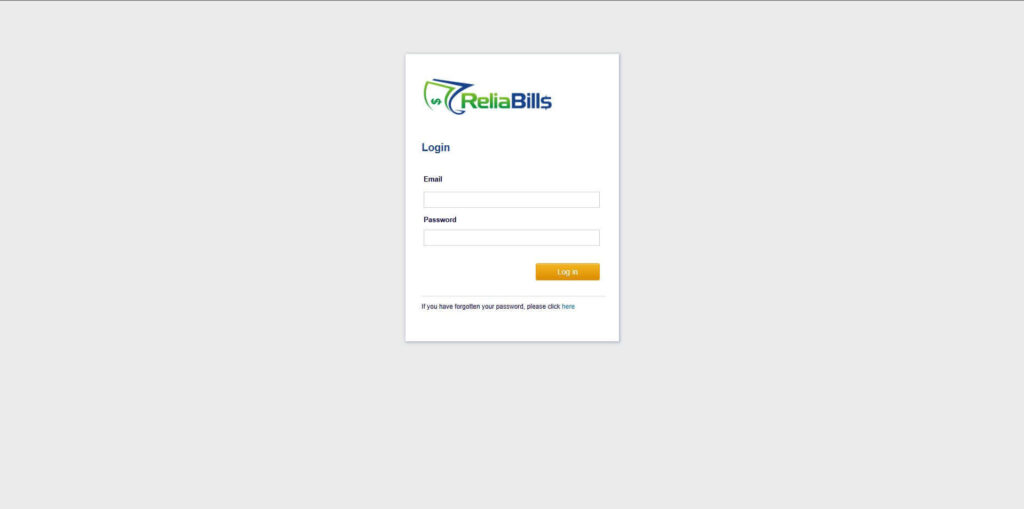
Step 1: Login to ReliaBills
- Access your ReliaBills Account using your login credentials. If you don’t have an account, sign up here.
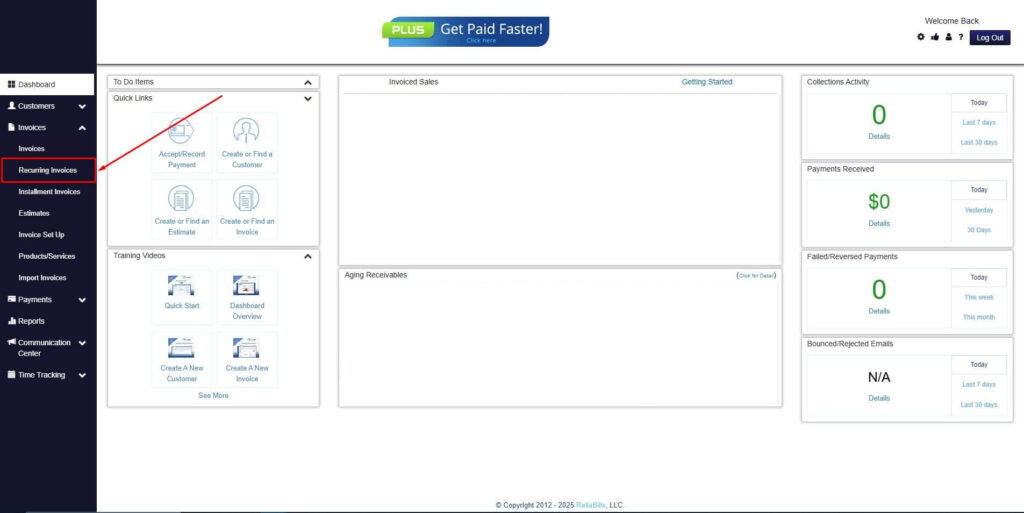
Step 2: Click on Recurring Invoices
- Navigate to the Invoices Dropdown and click on Recurring Invoices for an overview of the list of your existing customers.
Step 3: Go to the Customers Tab
- If you have already created a customer, search for them in the Customers tab and make sure their status is “Active”.
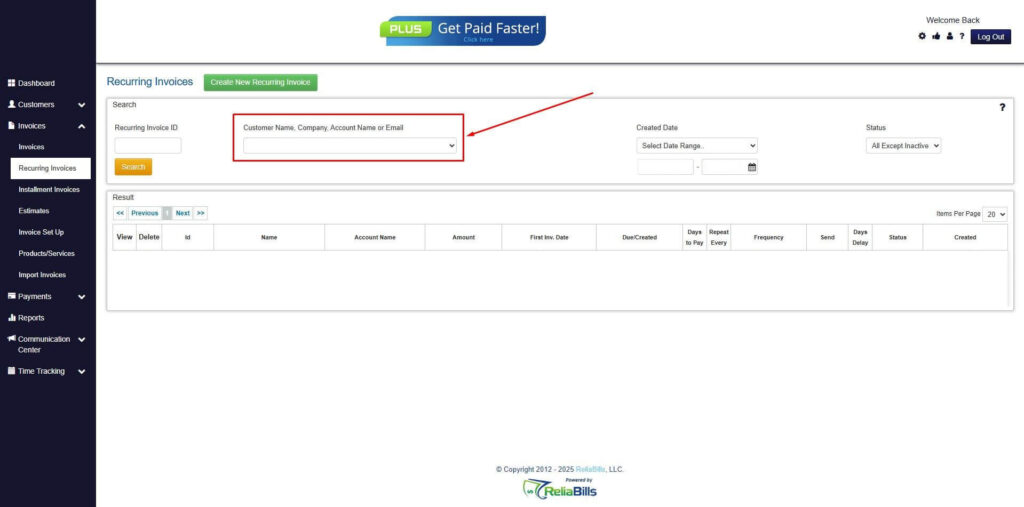
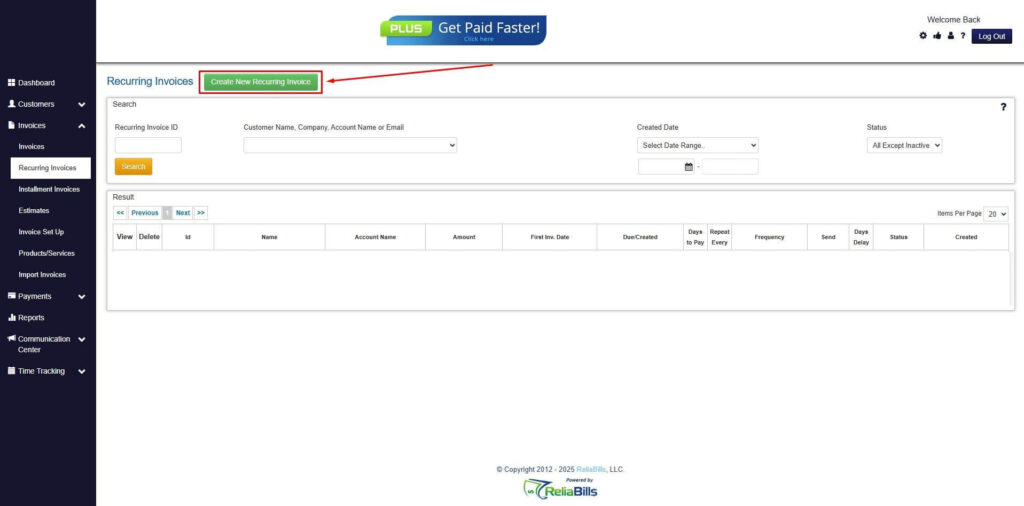
Step 4: Click the Create New Recurring Invoice
- If you haven’t created any customers yet, click the Create New Recurring Invoice to create a new customer.
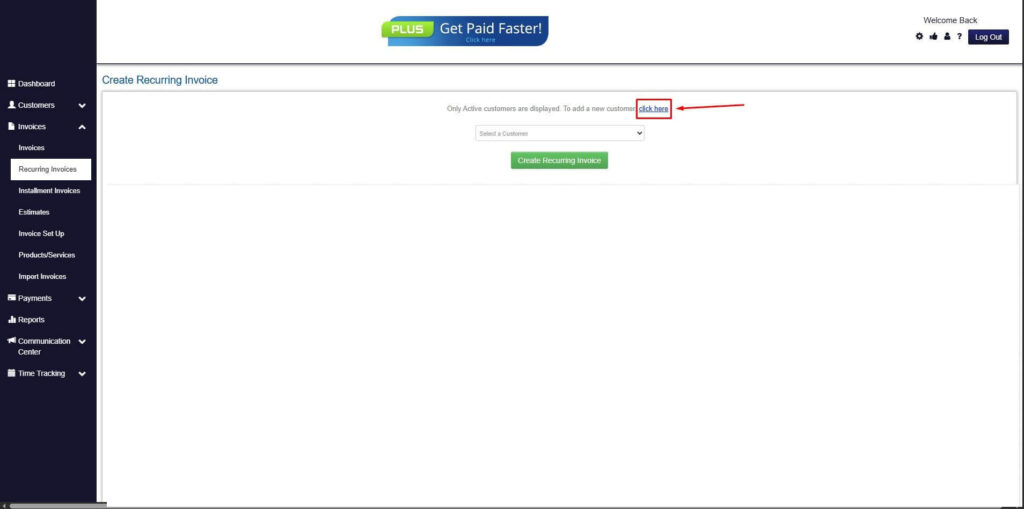
Step 5: Click on the “Click here” Button
- Click on the “Click here” button to proceed with the recurring invoice creation.
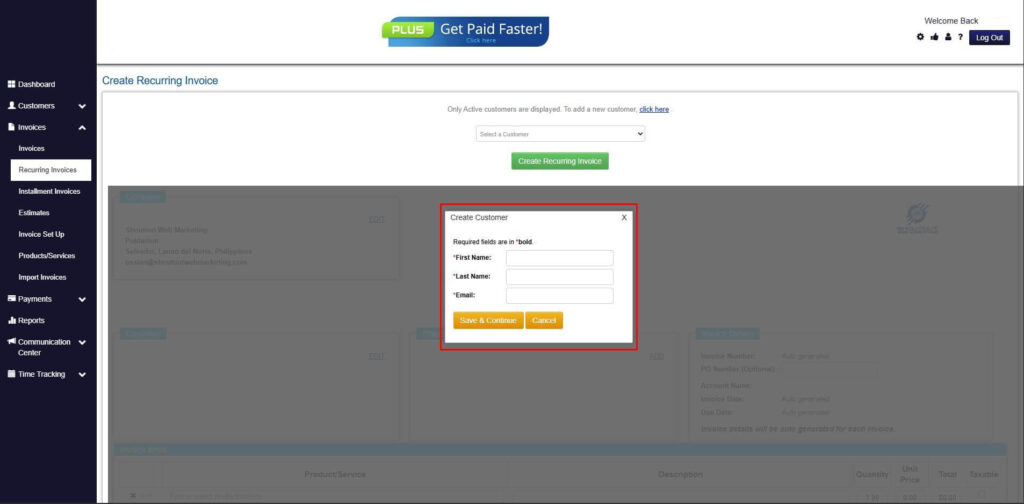
Step 6: Create Customer
- Provide your First Name, Last Name, and Email to proceed.
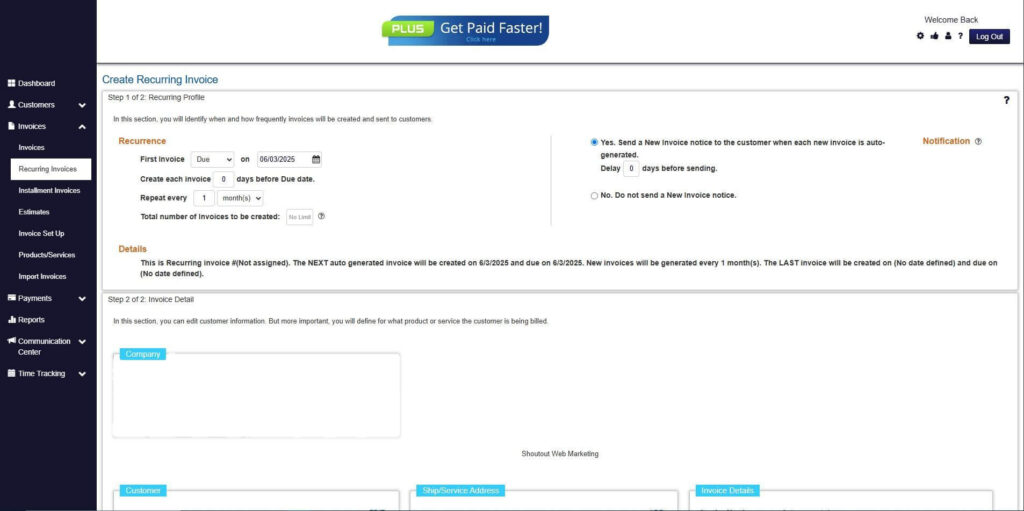
Step 7: Fill in the Create Recurring Invoice Form
- Fill in all the necessary fields.
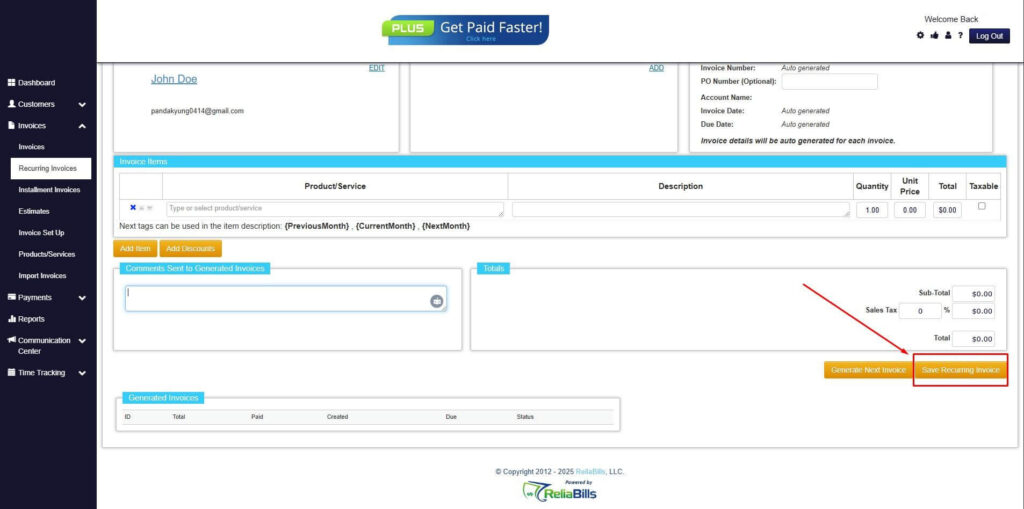
Step 8: Save Recurring Invoice
- After filling up the form, click “Save Recurring Invoice” to continue.
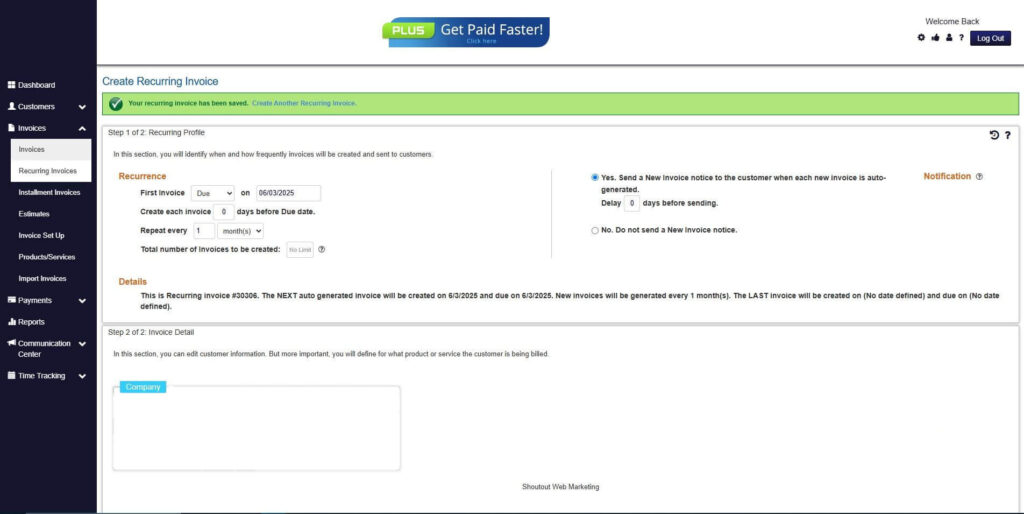
Step 9: Recurring Invoice Created
- Your Recurring Invoice has been created.
Frequently Asked Questions
1. What is bulk production billing automation?
It is the automated generation of invoices using production data, pricing rules, and contract logic to reduce manual errors in high-volume manufacturing.
2. How does automation reduce invoice disputes?
By applying consistent pricing rules and eliminating manual calculation errors, invoices are more accurate and easier for clients to verify.
3. Can automation handle recurring supply contracts?
Yes. Modern systems support recurring billing schedules aligned with long-term production agreements.
4. Is invoice automation scalable for large manufacturers?
Absolutely. Automated systems are designed to process high transaction volumes efficiently while maintaining accuracy.
Conclusion
Bulk production billing automation is no longer optional for manufacturers operating at scale. Manual processes introduce avoidable risks that impact profitability and client trust. Automation ensures accurate pricing, consistent recurring billing, and faster invoice processing.
By reducing billing errors, manufacturers protect revenue, accelerate collections, and strengthen client relationships. Operational efficiency improves alongside financial stability.
When selecting invoicing software, manufacturers should prioritize scalability, integration capabilities, and recurring billing support. The right system will not only reduce errors but also support long-term growth and revenue protection.